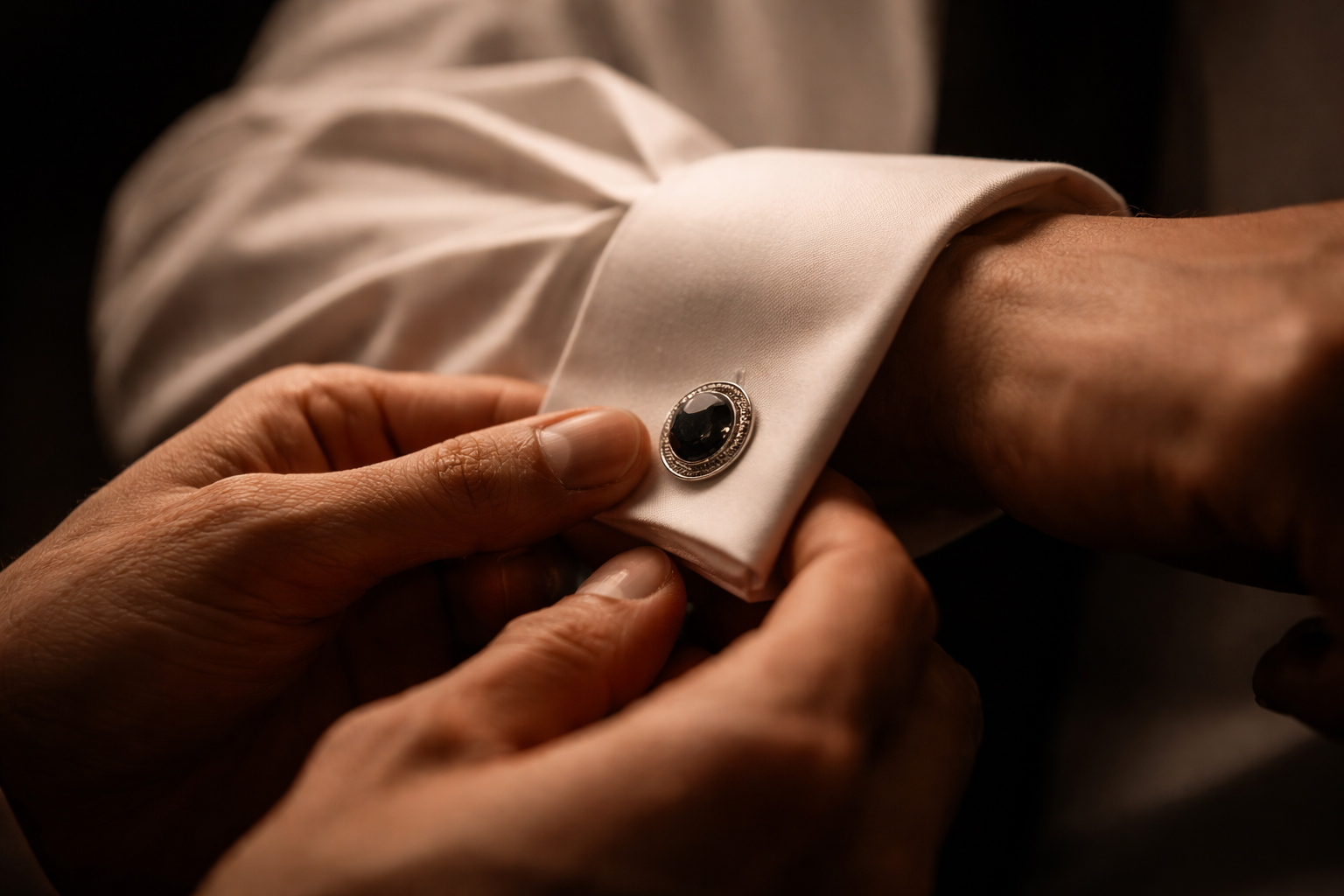
The Threshold Between Open and Closed
There is a moment, brief and often ignored, when a body crosses a line. Not into a room, but into readiness. It happens in silence. Fingers pull. Metal meets metal. Fabric tightens. Something closes.
Fastening is not an accessory to dressing. It is the act itself. The final gesture that turns cloth into armor, intention into posture, private into public. Before fastening, the body is undecided. After fastening, it commits.
Every zipper drawn, every clasp secured, every lace tightened marks a threshold. You are no longer assembling yourself. You are done. And the world may now respond.
Zippers: The Sound of Finality
Zippers are modern, abrupt, unmistakable. They do not negotiate. They declare.
The sound of a zipper carries finality. It announces closure in a single, continuous motion. There is no ambiguity in it. Once pulled, there is no gradual retreat. Zippers seal.
This is why zippers feel decisive. Jackets zip when you are ready to leave. Bags zip when you are done searching. A zipper does not linger. It completes.
Symbolically, zippers belong to environments of movement, speed, and control. They are functional, yes, but also psychological. The sound alone can shift posture. Shoulders square. Breath adjusts. The body knows what comes next.

Clasps: Trust Made Mechanical
Clasps work differently. They rely on alignment. Two parts must meet. One must accept the other.
Buttons, cufflinks, hooks, and buckles demand patience. They slow the wearer down. They ask for precision. In doing so, they introduce trust into the act of dressing. Trust that the closure will hold. Trust that it will not fail at the wrong moment.
Clasps are intimate. Often fastened close to the body, sometimes out of direct sight. They require memory and muscle awareness. Over time, hands learn them. The ritual becomes unconscious.
Where zippers close quickly, clasps close deliberately. They are not about speed. They are about certainty.

Laces: Negotiation With the Body
Laces do not close. They negotiate.
Each pull adjusts tension. Each loop invites revision. Laces respond to the body in real time. Tighten too much and movement suffers. Leave them loose and control disappears.
Shoelaces, corsets, ties, wraps — these are fastening systems that acknowledge fluctuation. The body changes throughout the day. Laces allow accommodation.
Symbolically, laces speak to discipline. Not rigidity, but calibration. The wearer participates actively in the fit. Presence is adjusted, not imposed.
Laces remind us that control is not static. It must be tuned.

Fastening as Psychological Signal
Fastening rituals do not only affect the body. They signal the mind.
Studies on embodied cognition show that physical actions influence mental states. Fastening is one of those actions. The repetition of closure tells the nervous system that preparation is complete.
This is why unfastening feels like relief. The mind registers it as permission. The day loosens. Guard drops. The body exhales.
In this sense, fastening is a boundary-setting practice. It marks the start of performance, engagement, or authority. When done intentionally, it creates a clear internal shift.
You are not pretending to be ready. You are ready.
The Silence After the Gesture
The most important part of fastening is not the motion itself. It is the silence that follows.
After the zipper stops, after the clasp clicks, after the lace settles, there is a pause. A fraction of a second where nothing moves. This is the moment of alignment.
In that stillness, the body registers containment. The garment holds. The signal is sent. You belong inside what you are wearing.
This is why rushed fastening feels incomplete. The silence never arrives. The mind stays open-ended. Something remains unresolved.
Ritual restores that silence. It allows the gesture to finish its work.
Dressing as Rehearsal for Control
Fastening rituals rehearse control in small, repeatable ways.
Each day offers dozens of opportunities to practice closure. To finish something cleanly. To signal readiness without spectacle. To move from open to closed with intention.
In a world that encourages constant exposure, fastening becomes an act of restraint. It says: not everything is accessible. Not everything is immediate. Some things require closure before engagement.
This is not about hiding. It is about choosing when and how to be available.
The way you fasten tells a story. About pace. About discipline. About respect for thresholds.
And like all rituals, its power lies not in visibility, but in repetition.