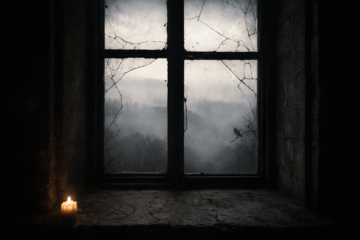
The Quiet Collapse of Meaning
Moral nihilism does not arrive with banners or slogans. It enters softly, like dust settling on unused furniture. It begins when inherited rules lose their authority, when commandments no longer command, and when values once defended with blood are questioned with a shrug. Moral nihilism is not rebellion. It is indifference. It is the moment when right and wrong are no longer opposing forces, but arbitrary labels applied after the fact.
This collapse is not sudden. It is cumulative. Traditions erode, institutions falter, and moral certainty fractures under scrutiny. What remains is not chaos, but vacancy. A silence where guidance once lived. In that silence, individuals are forced to confront an uncomfortable realization: there may be no moral structure beneath the surface at all.
Moral nihilism does not argue that we should be immoral. It suggests something more unsettling, that morality itself may have never existed beyond collective agreement. No cosmic ledger. No invisible judge. Just behavior, consequences, and stories we tell ourselves to make sense of them.
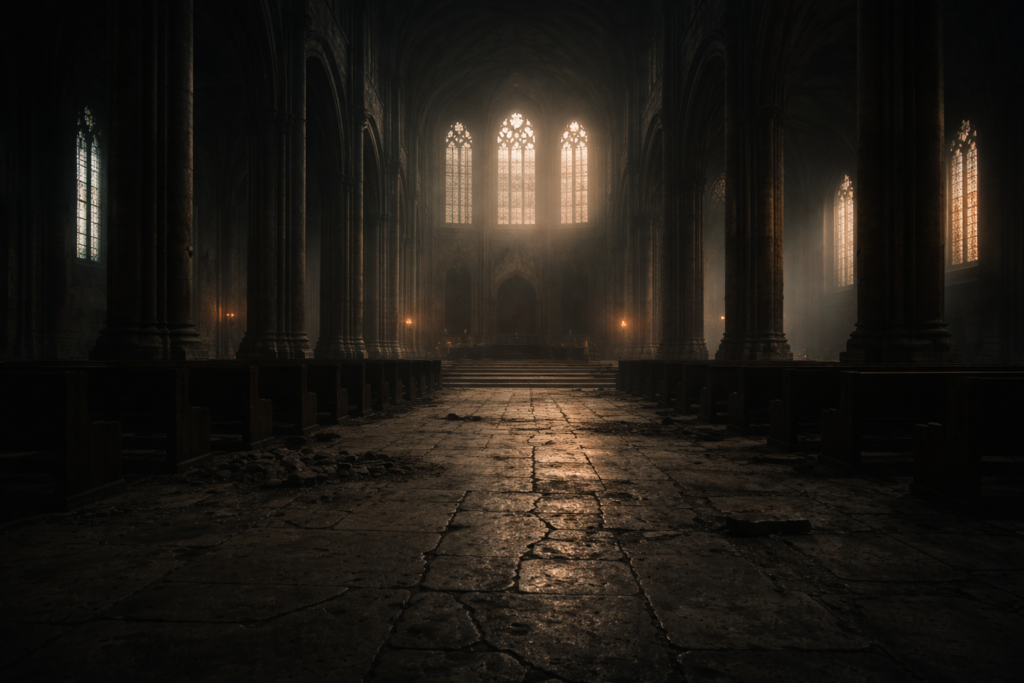
When Good and Evil Lose Their Weight
Good and evil once functioned as anchors. They organized societies, justified laws, and gave individuals a sense of moral gravity. Under moral nihilism, these anchors dissolve. Actions are no longer inherently good or evil, they are simply actions, interpreted differently depending on time, culture, and power.
This does not mean that harm disappears. Pain still hurts. Loss still scars. But moral nihilism separates suffering from moral absolutes. A violent act is no longer evil by nature, it is harmful by outcome. The distinction matters. It shifts morality from metaphysical truth to pragmatic evaluation.
Without absolute good or evil, moral language becomes symbolic rather than factual. Words like justice, honor, and virtue stop describing objective realities and begin functioning as social tools. They persuade, justify, and coordinate behavior, but they do not reveal universal truths.
This is where discomfort grows. If good and evil are constructs, then so is moral superiority. So is condemnation. So is innocence.
The Death of Moral Authority
Moral nihilism often follows the collapse of external authority. Religious doctrine, national myth, ideological certainty, all once claimed moral supremacy. As these structures lose credibility, their moral claims weaken alongside them. What remains is autonomy without instruction.
Philosophers like Friedrich Nietzsche did not celebrate this collapse as liberation alone. They warned that the absence of moral authority would produce disorientation before freedom. When the old gods die, something must replace them, or the void will.
Moral nihilism refuses replacement. It does not install new commandments or progressive ideals in place of the old. It strips morality down to its skeleton and asks whether anything remains once belief is removed.
The result is not moral anarchy, but moral exposure. Individuals are no longer protected by inherited righteousness. Every choice becomes personal. Every justification fragile.

Freedom Without Consolation
One of the most misunderstood aspects of moral nihilism is freedom. Without objective morality, individuals are technically free to define their own values. But this freedom comes without reassurance. There is no confirmation that one’s chosen values are correct. No guarantee that restraint is noble or that sacrifice matters.
This is where many retreat. They reconstruct moral systems out of preference or fear, borrowing ethics selectively to escape responsibility. Moral nihilism, taken seriously, offers no such escape. It does not comfort. It confronts.
You are free, yes. But you are also alone with the consequences of your actions. There is no moral alibi. No higher purpose to soften guilt or glorify suffering. Only decisions and their impact.
This is not despair. It is clarity. A refusal to outsource meaning.
The Danger of Misinterpretation
Moral nihilism is often accused of encouraging cruelty or apathy. This accusation misunderstands its core. Moral nihilism does not deny empathy, cooperation, or care. It denies that these traits are morally mandated by the universe.
Empathy still functions. Social bonds still matter. Harm still damages trust. But these realities are grounded in human consequence, not cosmic rulebooks.
The danger lies not in moral nihilism itself, but in shallow interpretations of it. When individuals treat the absence of moral absolutes as permission rather than responsibility, nihilism becomes an excuse rather than a lens.
True moral nihilism removes justification, not accountability.

Living After the Collapse
To live with moral nihilism is to accept uncertainty without retreating into illusion. It is to act without moral guarantees. To choose restraint without divine reward. To care without believing care is mandatory.
This position is not heroic. It is sober. It acknowledges that meaning is constructed, fragile, and temporary. But it also recognizes that chosen meaning, precisely because it is chosen, carries weight.
In the absence of moral absolutes, actions matter more, not less. Not because they are judged eternally, but because they shape real lives in finite time.
Moral nihilism does not ask you to abandon ethics. It asks you to stop pretending they are universal truths. What remains is intention, consequence, and the quiet discipline of choosing anyway.