The Shape That Thinks
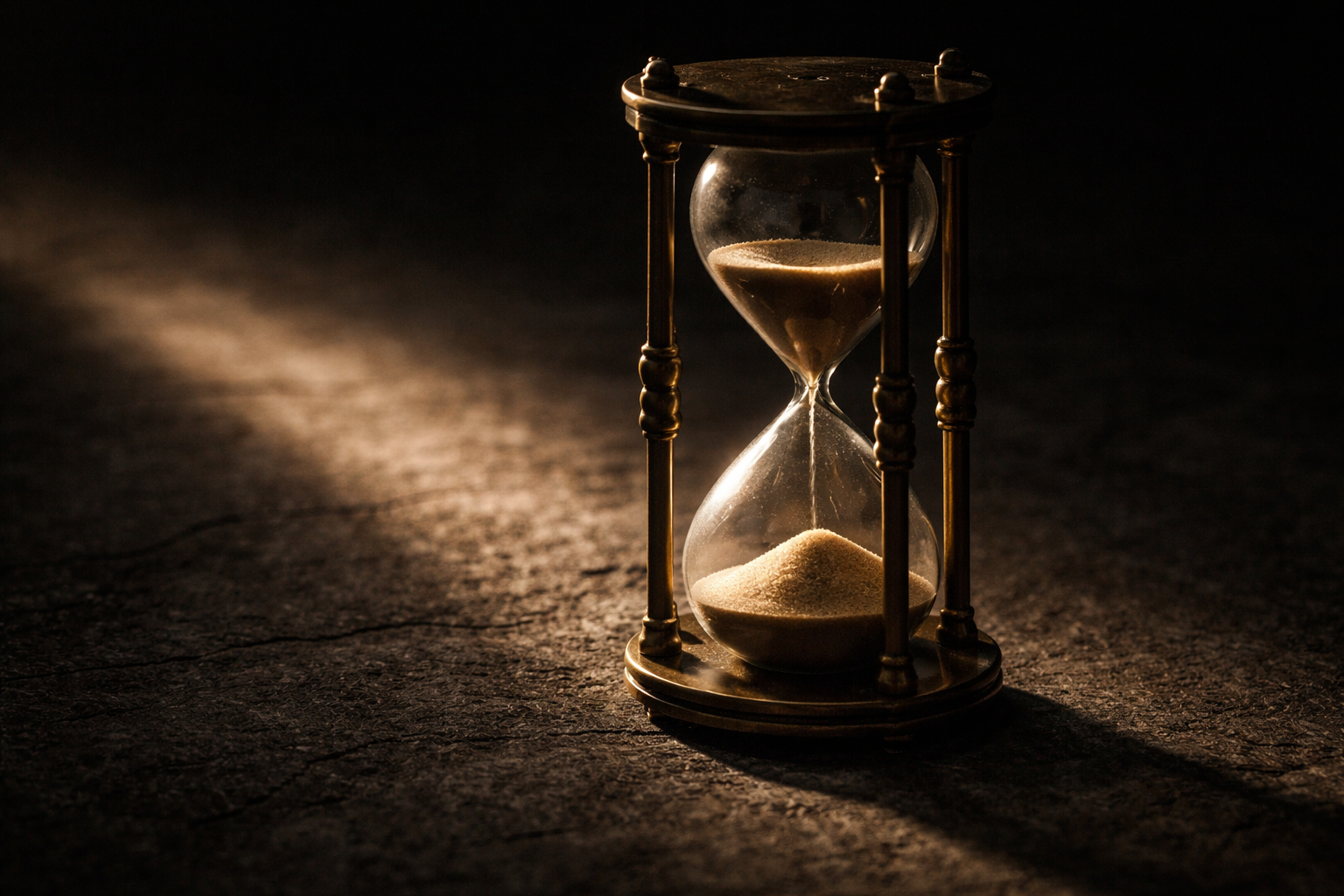
Before the clock made time invisible, a current beneath the surface of things, the hourglass made it a body. It gave duration a silhouette. Two chambers, one throat, and gravity as the only mechanism: the hourglass does not measure time so much as it performs it. You do not read an hourglass the way you read a dial. You watch it. You wait with it. The distinction is not minor.
What we built when we built the hourglass was not an instrument of precision. It was an instrument of confrontation. The sand does not lie. It does not accelerate toward appointments or compress itself into efficiency. It falls at the only rate it knows. And in that falling, it demands you hold still long enough to notice that something is ending.
Two Chambers, One Body
The hourglass is formally a body in two halves, upper and lower, full and filling, connected at the narrowest possible point. This is not incidental geometry. The waist is the entire argument. Everything passes through that throat and nothing passes back. The upper chamber is always becoming the lower. The lower is always becoming the past.
Medieval European monks called the upper chamber the living and the lower the dead. Whether or not the etymology holds, the instinct is correct. The sand descending is not time being measured. It is time being spent. What sits above is still yours. What has fallen is not retrievable by turning the glass, only deferred, and only once.
The hourglass encodes the logic of a life in its outline. We recognize it without being told what it means.
Memento Mori in Glass
The skull on the desk. The half-burned candle. The cut flower in the vase. Vanitas painting accumulated objects whose only shared property was that they would not last. The hourglass was among the most common. It appeared in Flemish still lifes with the same frequency as fruit left to mottle, another beautiful thing on the verge.
But unlike the skull, the hourglass is not already dead. It is dying in real time, in the room, in the same light that falls on you. This made it a more unsettling presence than any static symbol. The skull says: this will happen. The hourglass says: this is happening. The difference in tense is the difference between a philosophy and an experience.
To keep an hourglass on a desk is to keep a mirror that reflects forward.

Urgency Without Alarm
The clock disciplines. It segments the day into obligations and divides attention into parcels. Its urgency is bureaucratic. The hourglass, by contrast, has no alarm, no chime, no mechanism for anxiety beyond the visual fact of sand. And yet it generates a quality of attention the clock cannot; not because it threatens punishment, but because it makes finitude beautiful.
Meditation practitioners have noted this for centuries. The falling sand is itself a focal object. The rhythm is slow enough to inhabit and fast enough to show movement. Watching the hourglass is not a passive act: it is a practice in staying with impermanence without flinching. Each grain is individually insignificant. The mass in motion is everything.
The hourglass does not tell you what to do with your remaining time. It only tells you that there is remaining time, and then less.
Inversion as Ritual
The gesture of turning the hourglass is underexamined. It is one of the few acts in daily life that treats time as physically reversible; a theater of reprieve. You flip the glass and the spent sand becomes potential again. The lower chamber empties upward into promise. But what is restored is not the time that passed. It is only the shape of time, ready to be spent once more.
This is the ritual’s real content: not the illusion of reversibility, but the acknowledgment that time operates in cycles we can mark but not escape. Every flip is a small ceremony. It says: we were present for that interval. We witnessed it. Now we begin another.
Ancient water clocks and sundials required natural forces, streams, the sun, that operated independently of the watcher. The hourglass required a human hand. Someone had to decide to turn it. The device only continues to function through an act of will. This makes every interval deliberately chosen, and every completed cycle a small act of accountability.
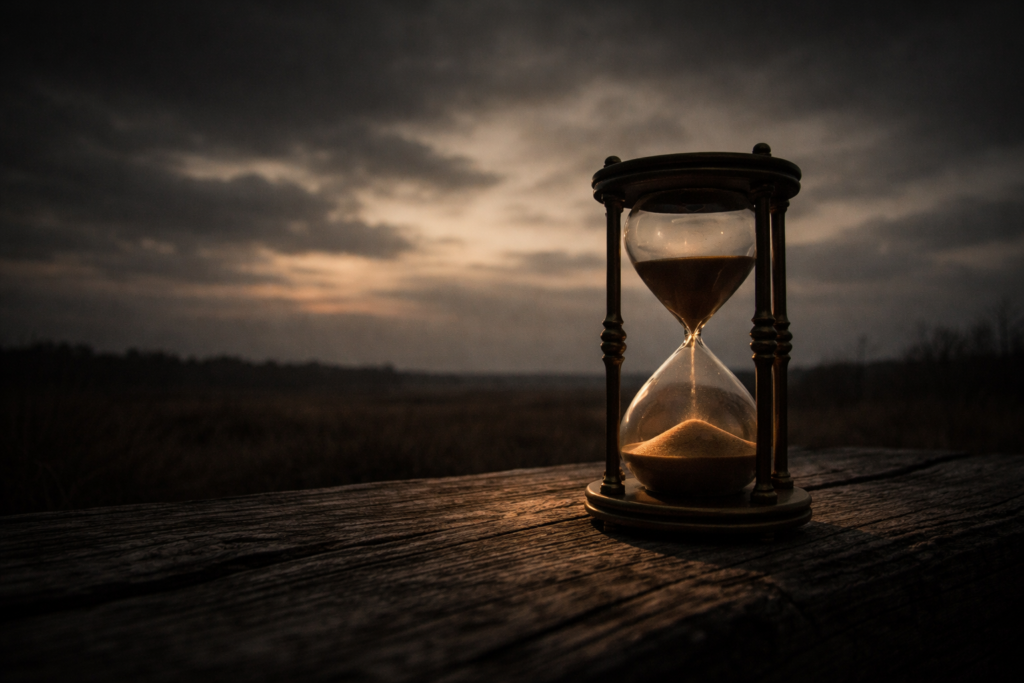
The Throat Is the Message
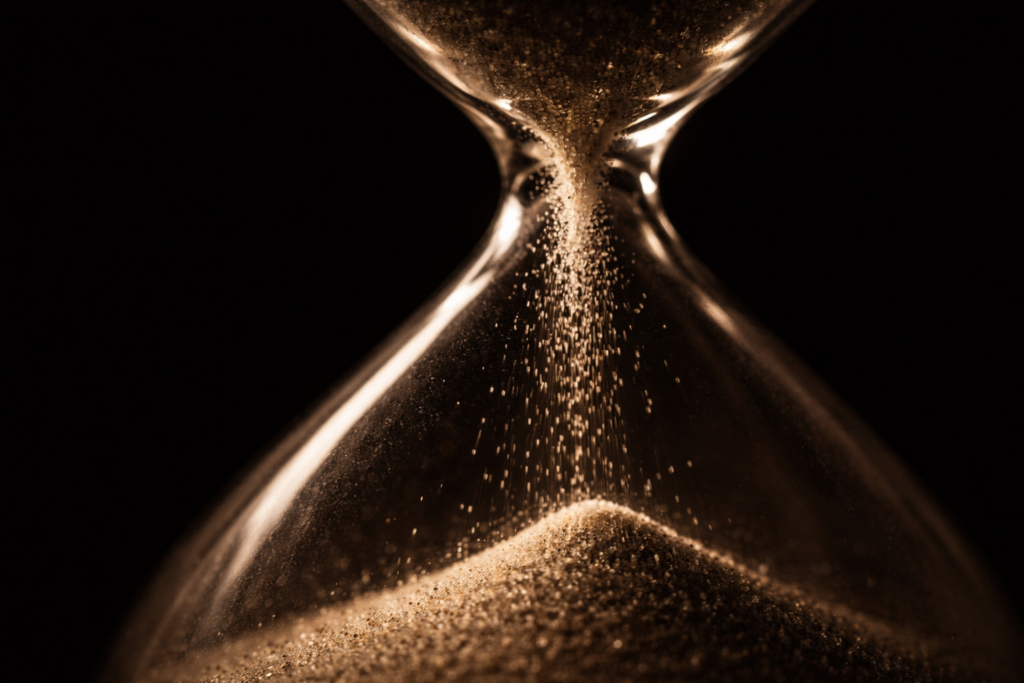
The hourglass endures not because it kept good time, it didn’t, not precisely, but because it kept honest time. The throat is where meaning concentrates: narrow enough to create scarcity, open enough to allow passage. Nothing accumulates there. Everything moves through.
This is what architecture at its best has always attempted: to give invisible forces a form that makes them felt. The hourglass is architecture at the scale of the hand. Its proportions encode an entire cosmology. Upper and lower, abundance and depletion, the present and the past, all of it held in two chambers of glass and a column of sand that falls without asking your permission.
Keep one on your desk not as decoration, but as argument. It will make the same point every day, and it will not wait for you to be ready.