The First Mark
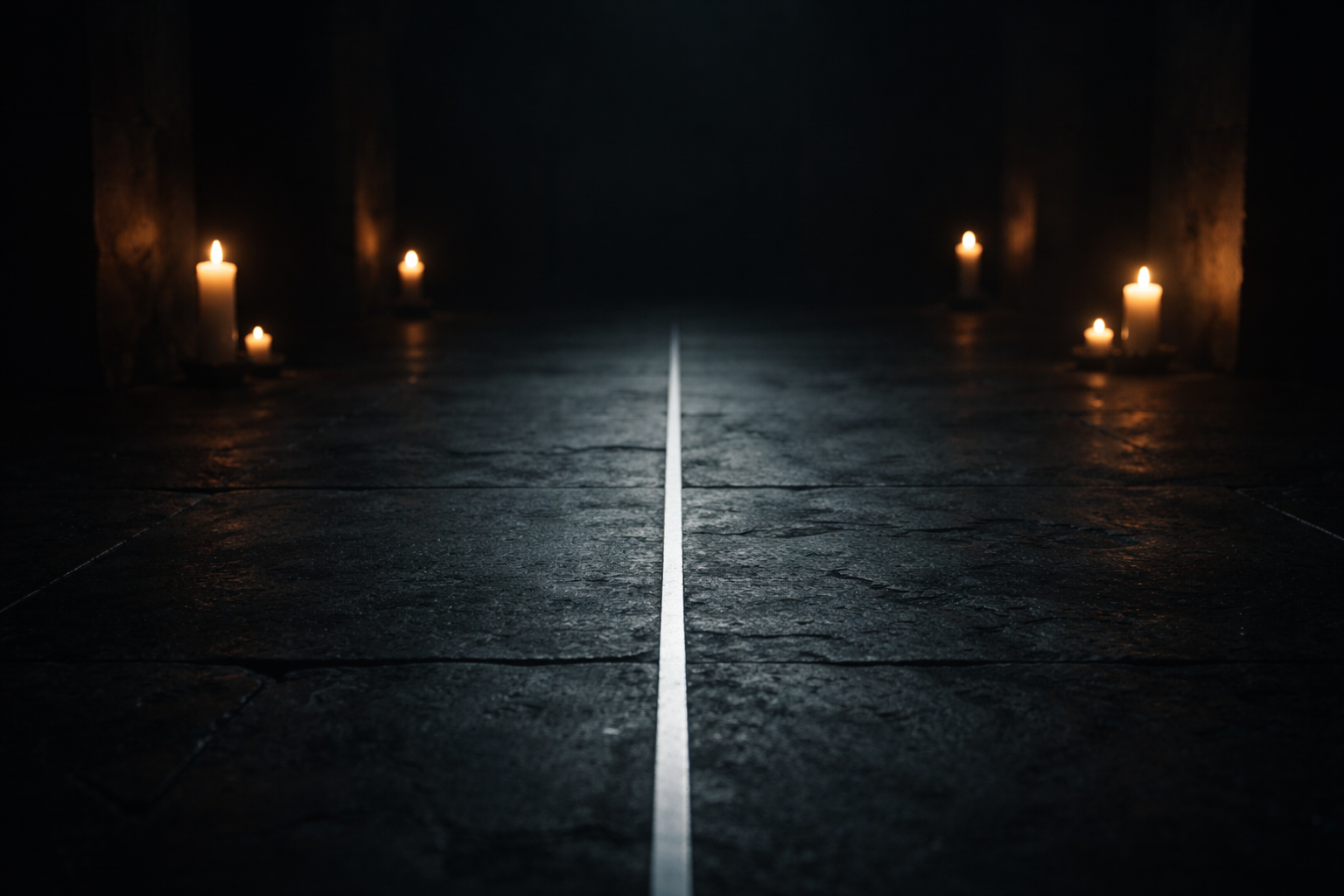
Before there was form, there was the decision to divide. The line is not a shape born of abundance, it is born of restraint. One movement. One direction. No excess. When the first line is drawn, something irreversible happens. Space is no longer neutral. It is claimed, separated, defined. The line announces intent.
Unlike circles or squares, the line does not promise safety. It does not enclose or protect. It cuts. It leads. It points forward or draws a boundary behind you. A line is the geometry of choice. Once drawn, it demands consequence. You cannot stand on both sides of it without tension.
In ritual and architecture, the line often appears before meaning. A threshold is marked before it is named. A path is drawn before it is walked. The line does not explain itself. It waits.
Boundaries and Thresholds
Every culture understands the power of the line, even if unconsciously. Borders on maps are nothing more than confident strokes made permanent. Sacred spaces begin with a marked edge. A step across a line changes status, outsider to insider, civilian to initiate, past to present.
The line is where transformation starts. It is thin, almost fragile, yet it holds immense authority. A painted stripe on the road decides who stops and who moves. A signature line at the bottom of a page converts intention into obligation. The line is not loud, but it is absolute.
In personal terms, lines are drawn when silence fails. When ambiguity becomes dangerous. When something must be said or ended. The line appears when patience is exhausted. It is clarity sharpened into geometry.
Direction Without Return
A line suggests movement even when it stands still. Unlike a point, which exists in isolation, a line implies continuation. It stretches beyond the visible, hinting that what you see is only a fragment. Every straight line carries an unseen future.
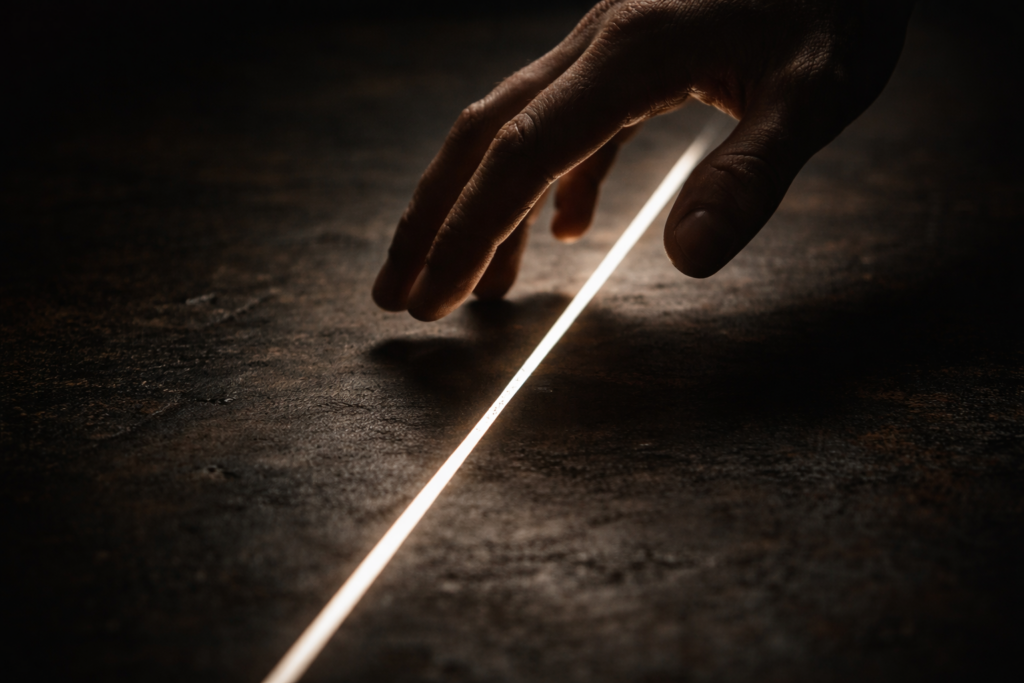
This is why lines are used to guide, corridors, runways, timelines, scars. They show where something has been and where it cannot go back. A line remembers motion. Even carved in stone, it recalls the hand that moved forward without hesitation.
There is no neutrality in a line. Horizontal lines rest. Vertical lines command. Diagonal lines disturb. Each carries emotional weight. Designers know this. So do military strategists. So do artists who want to create tension without chaos.
The Line as Control
Power loves the line. Systems depend on it. Rules are lines made invisible. Laws are lines drawn in language instead of chalk. Once crossed, consequences follow. Once accepted, obedience settles in.
Yet control is not always external. The most powerful lines are internal. The ones you promise yourself not to cross. The values you refuse to dilute. The moment you decide that something ends here. These lines do not need witnesses. They hold because you hold them.
To live without lines is to dissolve. To live with too many is to suffocate. Mastery lies in knowing which lines are essential and which are inherited, imposed, or obsolete.
Minimalism and Meaning
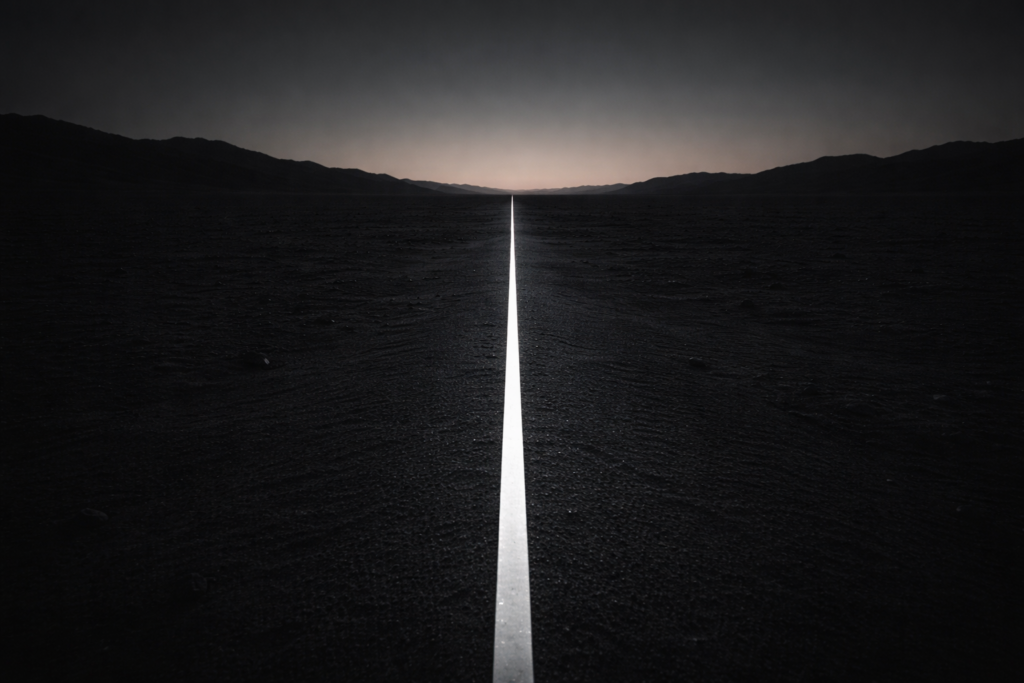
The line is the ultimate minimalist gesture. One stroke. No decoration. No apology. It removes instead of adding. In a world obsessed with complexity, the line feels almost radical. It says enough.
This is why lines appear in uniforms, insignias, and codes. They strip identity to function. Rank becomes visible. Allegiance becomes readable. Chaos is reduced to order by a few deliberate marks.
But minimal does not mean empty. The line carries meaning precisely because it refuses distraction. It asks the observer to confront what remains when everything unnecessary is removed.
Crossing the Line
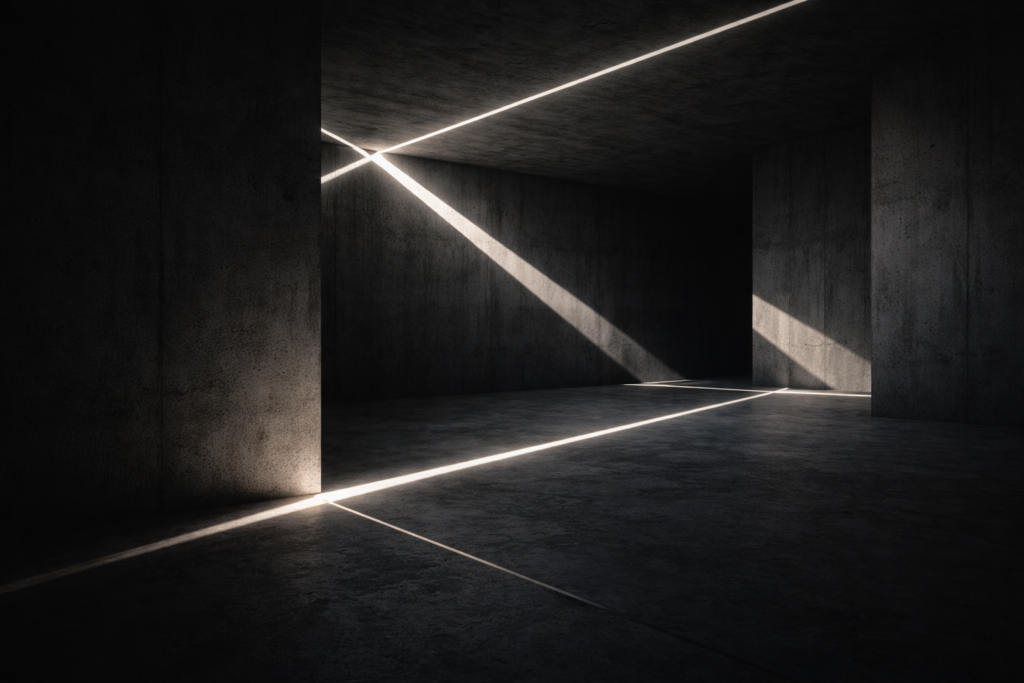
At some point, every story hinges on a line being crossed. The safe becomes risky. The observer becomes a participant. The known becomes unstable. Crossing a line is never accidental, even when it pretends to be.
The line waits patiently. It does not chase. It does not argue. It simply exists. The moment you step over it, you are no longer who you were before. This is why lines are feared and revered. They demand accountability.
In the end, the line is not about division. It is about decision. It is the quiet geometry of commitment. A beginning disguised as a limit. A limit that reveals who you are willing to become.