Movement That Refuses to End
The spiral is not content with arrival. Where other shapes close themselves off, the spiral continues. It circles, yes, but never the same way twice. Each rotation carries distance. Each return arrives changed. The spiral moves forward by remembering where it has been.
This is why the spiral feels alive. It suggests growth without straight lines, progress without finality. There is no beginning you can clearly point to, no end you can comfortably anticipate. The spiral denies closure. It prefers continuation.
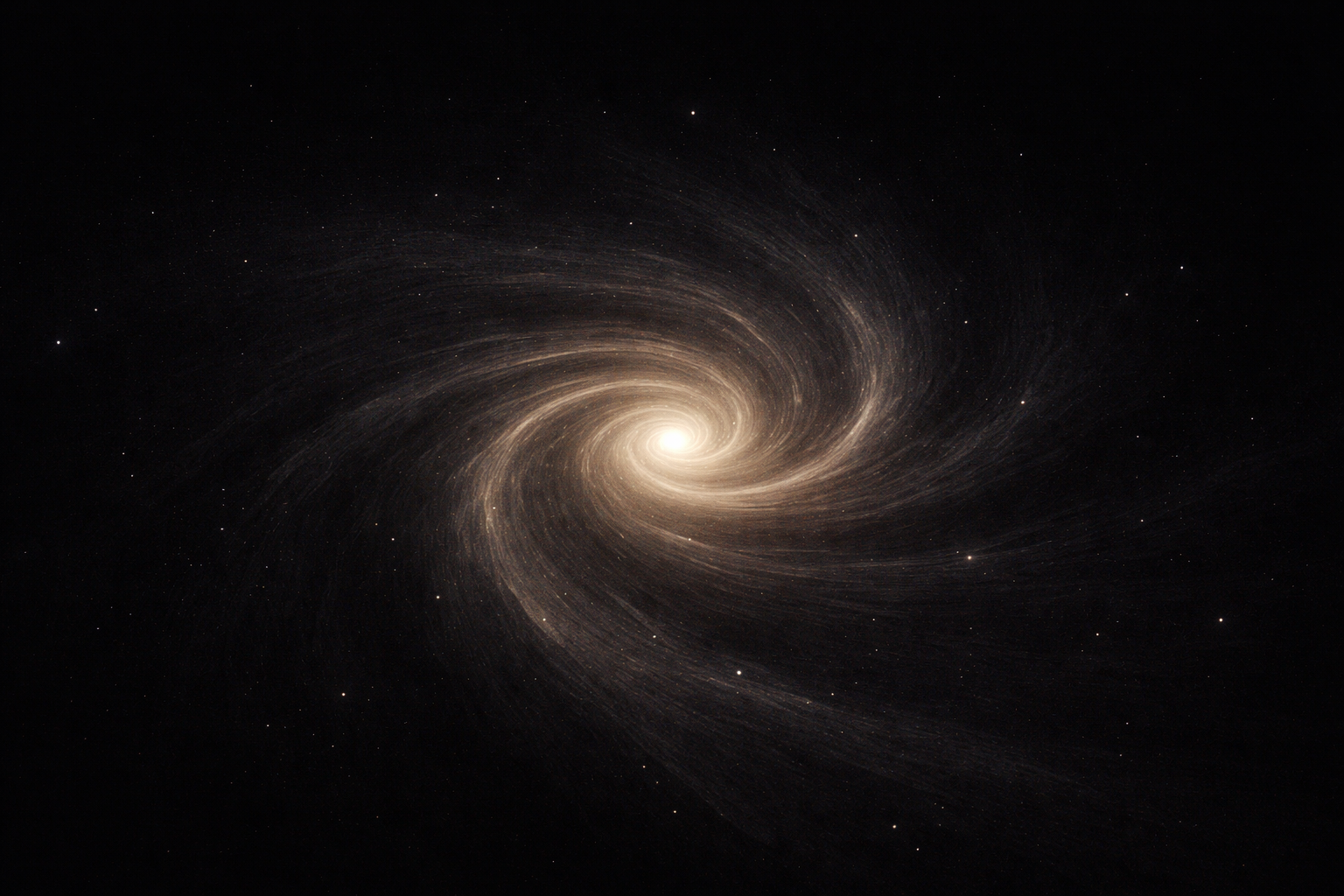
In nature, the spiral appears where movement must persist. Shells grow by spiraling outward. Storms form by spiraling inward. Galaxies rotate around invisible centers. The spiral is not decorative. It is the geometry of endurance.
Time Made Visible
The spiral is how time would draw itself if it could. Not a straight arrow. Not a closed loop. But a path that revisits familiar territory while drifting further away from its origin.
We experience time this way, whether we admit it or not. Patterns repeat. Lessons resurface. Old questions return with new weight. The spiral explains why growth often feels like regression, and why returning does not mean failing.
Every spiral carries memory. Each curve contains the echo of the one before it. This is why spirals feel psychological. They mirror how the mind processes experience, circling unresolved thoughts, revisiting moments, slowly widening perspective.
The Center That Cannot Be Reached
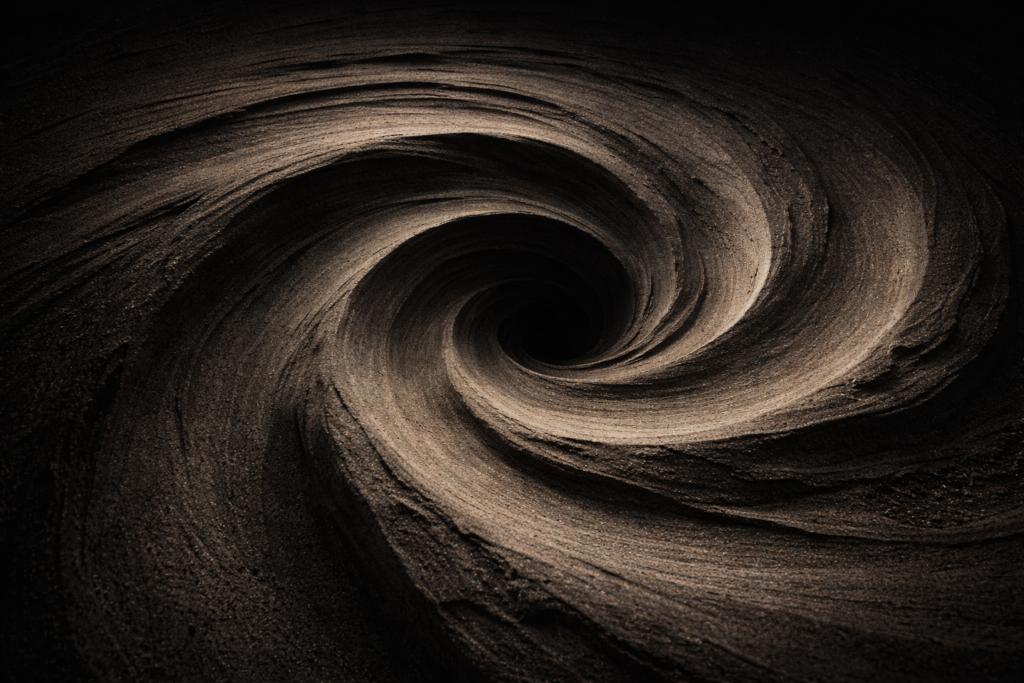
At the heart of every spiral lies a paradox. A center that anchors everything, yet is never fully accessible. You can approach it. You can orbit it. But the closer you get, the tighter the turns become.
This is why spirals often appear in ritual and meditation. They promise proximity without possession. Understanding without mastery. The spiral teaches restraint. It reminds us that some truths are approached, not seized.
To chase the center directly is to misunderstand the shape. The spiral demands patience. It rewards those willing to move with it, rather than against it.
Control and Surrender
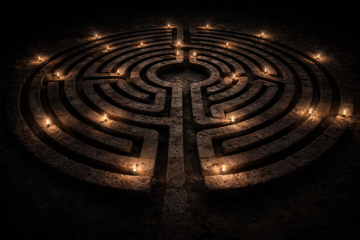
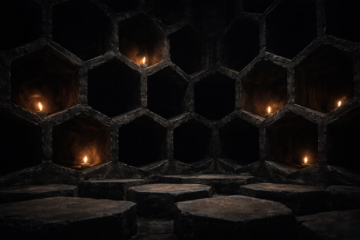
Unlike grids or hexagons, the spiral resists domination. You cannot fully contain it. You can guide it, influence it, but never force it into rigidity without breaking its essence.
This makes the spiral unsettling to systems built on control. It introduces motion where stability is expected. It bends order into something organic. It refuses the binary of start and finish.
Yet the spiral is not chaos. Its movement is precise. Measured. Governed by ratios and rhythms. The spiral shows that surrender does not mean disorder. It means alignment with forces larger than intention.
The Spiral in Human Design
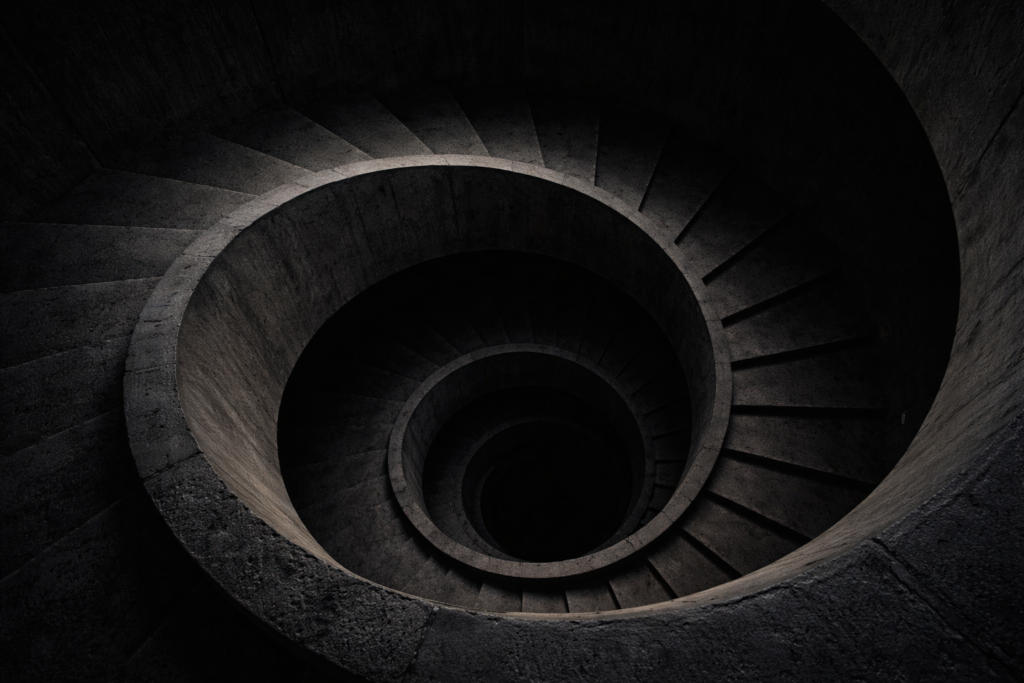
From ancient carvings to modern algorithms, humans return to the spiral when attempting to express complexity. Staircases that ascend endlessly. Data visualizations that reveal cycles. Narratives that loop back on themselves.
The spiral appears when linear thinking fails. When progress is no longer a straight path. When solutions require iteration rather than resolution.
In personal terms, the spiral defines transformation. You do not become someone else overnight. You circle your former self. You revisit old habits. You shed layers gradually. The spiral allows change without erasure.
Becoming, Not Arriving
The spiral does not promise answers. It promises movement. It does not lead you out. It leads you deeper. Not toward a destination, but toward an understanding that remains unfinished.
This is why the spiral endures as a symbol. It does not lie. It does not simplify. It acknowledges that becoming is a process without a finish line.
To walk the spiral is to accept that you will return, but never unchanged. That growth is recursive. That clarity emerges slowly, through repetition, friction, and time.
The spiral is not the path of certainty. It is the path of persistence.