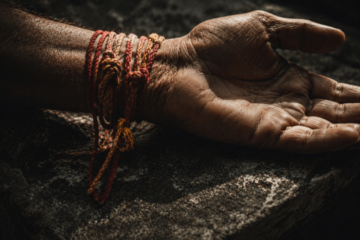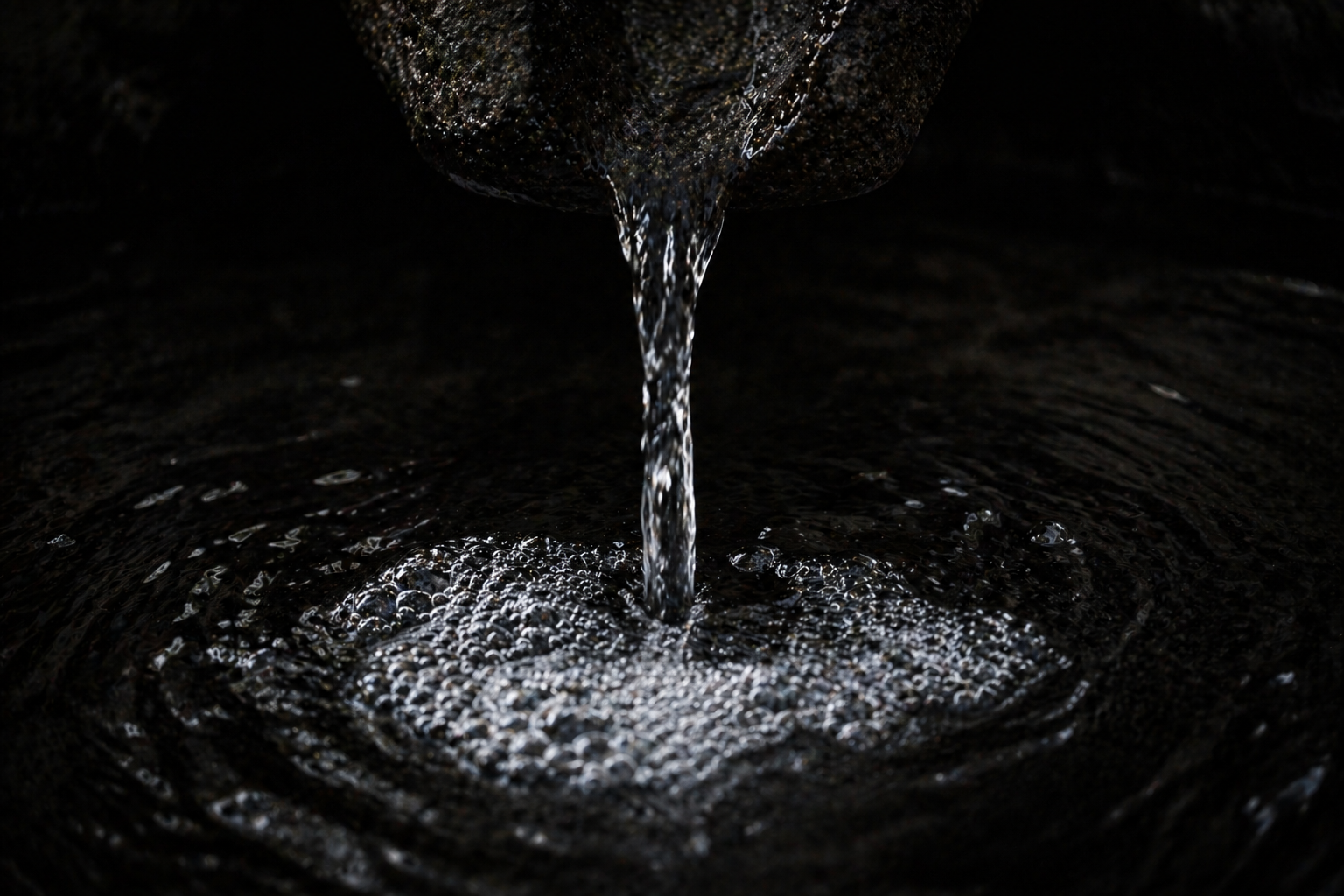
You do not enter a sacred space as you are. This is the oldest architectural principle in the world; older than any building, older than any doctrine. Before the door, there is water. Before the crossing, there is the washing. The body that arrives is not the body that enters.
This is not hygiene. It never was.
What Dirt Actually Means
To understand ritual washing, you must first understand what ritual dirt is, because it has almost nothing to do with physical contamination. The anthropologist Mary Douglas, in her landmark study of pollution and taboo, argued that dirt is fundamentally matter out of place. It is not a substance but a category violation. Shoes on a table are dirty. The same shoes on the floor are not. The dirt is not in the object. It is in the transgression of boundary.
Ritual impurity operates by the same logic, extended into the sacred register. The person who has been in the presence of death, or who has crossed from the sexual into the ceremonial, or who arrives carrying the residue of the ordinary world; this person is not unclean in any medical sense. They are misplaced. They carry the categorical signature of another domain, and that signature must be dissolved before the crossing can be made.
Water does not clean this. Water reclassifies it. The washing is a renegotiation of category, performed on and through the body.
Four Waters
The traditions are not the same, but they rhyme.
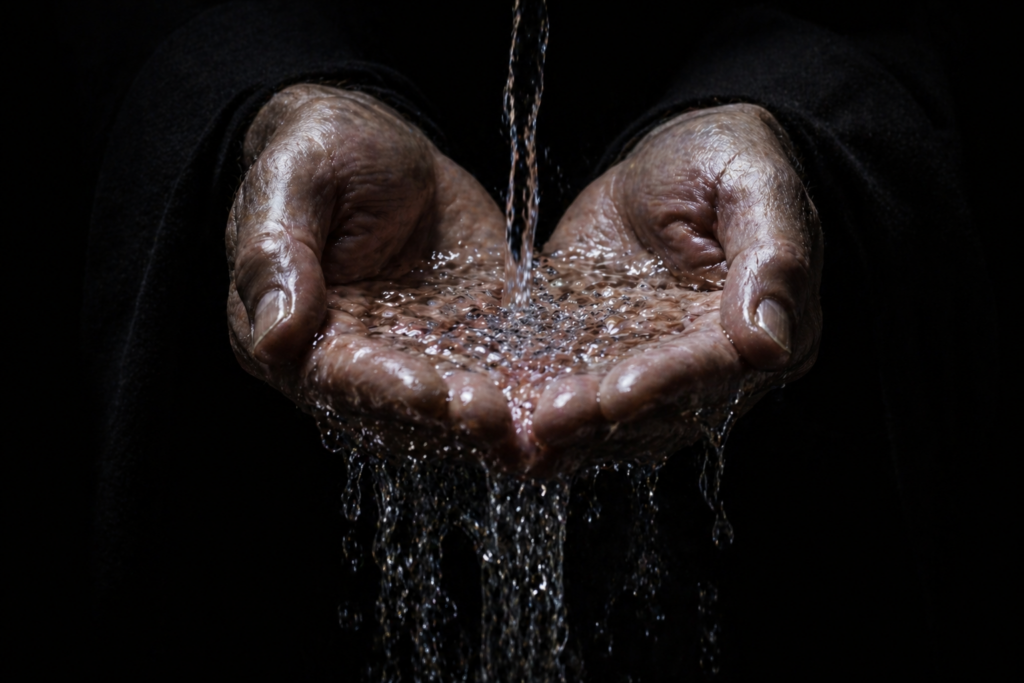
Islamic wudu, the ritual ablution performed before prayer, is precise to the point of choreography. The sequence matters: hands, mouth, nose, face, arms to the elbow, the head, the ears, the feet. Each movement is accompanied by intention, niyyah. The washing without intention is not wudu. It is merely washing. What purifies is not the water but the directed attention moving through the water.
The Jewish mikveh demands full immersion; every part of the body, every strand of hair, in contact with water that meets strict requirements of source and volume. The mikveh is used after menstruation, after childbirth, before conversion, before Yom Kippur. It marks not just cleanliness but transition: the person who emerges is legally, ritually, categorically different from the person who descended the steps.
Shinto misogi, purification through water, is among the oldest ritual forms in Japan. The waterfall, the river, the sea. The practitioner stands beneath falling water, sometimes in winter, and allows the force of the water to carry away what must not be brought into the sacred space. The harae, the broader Shinto framework of purification, understands impurity as kegare: a dulling, a diminishment, a kind of spiritual static. Water restores signal.
Roman ablutio before temple entry, Greek chernips at the sanctuary entrance, Hindu snana before worship; the form shifts, the logic does not. Water at the threshold is among the most universal of human ritual technologies.
The Threshold as Architecture
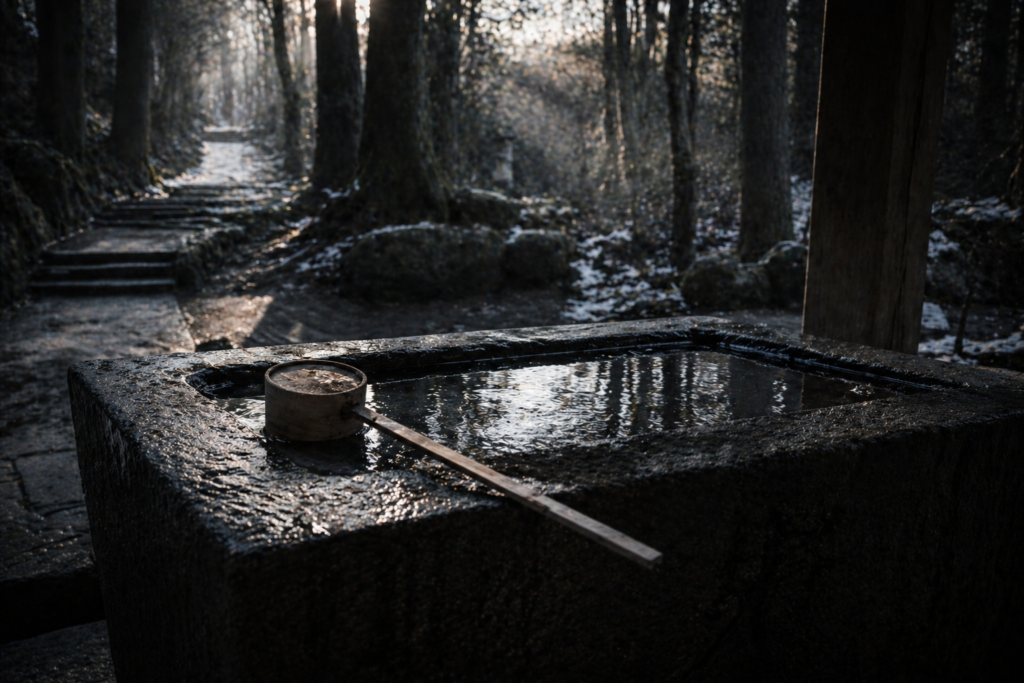
The placement of water is not incidental. The font at the entrance to the Christian church. The stone basin, temizuya, at the path to the Shinto shrine. The footbath at the door of the mosque. These are not afterthoughts of sacred architecture. They are the architecture’s first argument.
The threshold is a theory of space: it asserts that what lies beyond it is different in kind from what lies before. Not merely different in function, as a kitchen differs from a bedroom, but different in ontological register. Sacred space is not more important than ordinary space. It is a different type of space; one that operates by different rules, that requires a different quality of attention, that cannot be entered in the same mode in which the street is navigated.
Water at the threshold enforces this distinction. It makes the crossing legible to the body. The ritual of washing is the body’s education in the difference between domains.
What Is Actually Removed
If ritual dirt is not physical, then ritual washing removes something interior, but not interior in the psychological sense. Not guilt, not anxiety, not trauma. These are the concerns of a later and more individualistic vocabulary.
What is removed is relational residue: the accumulated categorical weight of previous contexts. The marketplace, the deathbed, the marriage bed, the road; each of these is a domain with its own logic, its own set of relationships, its own claim on the person who passes through it. To move from one domain to another without washing is to bring the previous domain’s claim with you. To contaminate not yourself but the sacred space; to make it bear the weight of what it is designed to be separate from.
The washing releases the claim. It says, formally and physically: I have left that place. I am not bringing it here.
After the Water
There is a quality of attention that becomes available only after the washing. Those who practice wudu consistently describe it not as preparation for prayer but as the beginning of prayer; the moment at which the register shifts and the interior begins to quiet. The mikveh’s immersion is described by those who use it as a kind of reset: the person who surfaces is not continuous with the person who descended.
This is what the ritual is actually engineering. Not cleanliness. Not compliance. A particular quality of presence; the presence of someone who has formally, physically, bodily declared: I am here now. The rest has been put down.
The water does not wash you. It witnesses the decision to arrive.