The Smallest Argument in the Room
The pocket square occupies perhaps four square inches of visible real estate. It emerges from a slit in the chest of a jacket that exists, structurally, for no other reason. It carries nothing. It fastens nothing. It is, by any functional account, unnecessary; which is precisely what makes it one of the most honest communicators in men’s dress.
When a garment serves no purpose except appearance, its appearance becomes its entire meaning. The pocket square cannot hide behind utility. It has no buckles to justify, no collar to protect, no pockets to fill. It is pure statement, which means the man who wears one is making a statement whether he has considered it or not. The question is not whether the fold communicates. The question is whether you know what yours is saying.
What follows is an attempt at translation.
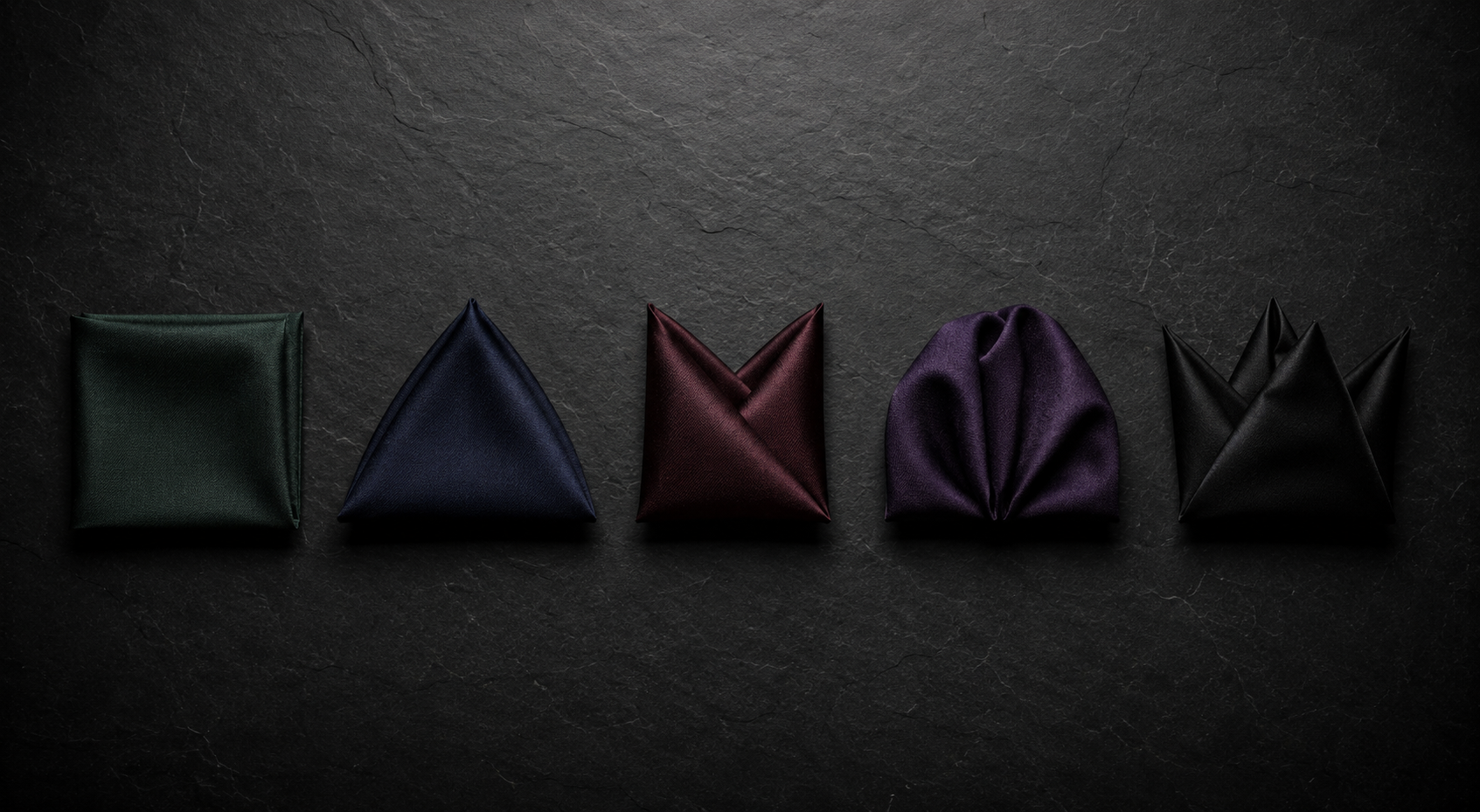
The Flat Fold: The Statement of Restraint
The flat fold, a single horizontal edge of fabric sitting level with the pocket’s mouth, no peaks, no flourish, is the fold that refuses to perform. It is the most disciplined option available, and discipline is precisely what it communicates. The flat fold says: I have considered this, and I have decided that less is the answer.
This is not minimalism in the fashionable sense; the curated absence that secretly demands to be noticed. It is something quieter and more committed: a genuine preference for precision over drama, for the single clean line over the cascade of angles. It suits dark fabrics, solid colors, the kind of cloth that rewards close attention. Among the 1984.black collection, The Covenant Fold, its name already an argument for the deliberate, and The Ember Cipher with its deep, controlled tones both fold flat with an authority that more elaborate presentations would only undermine.
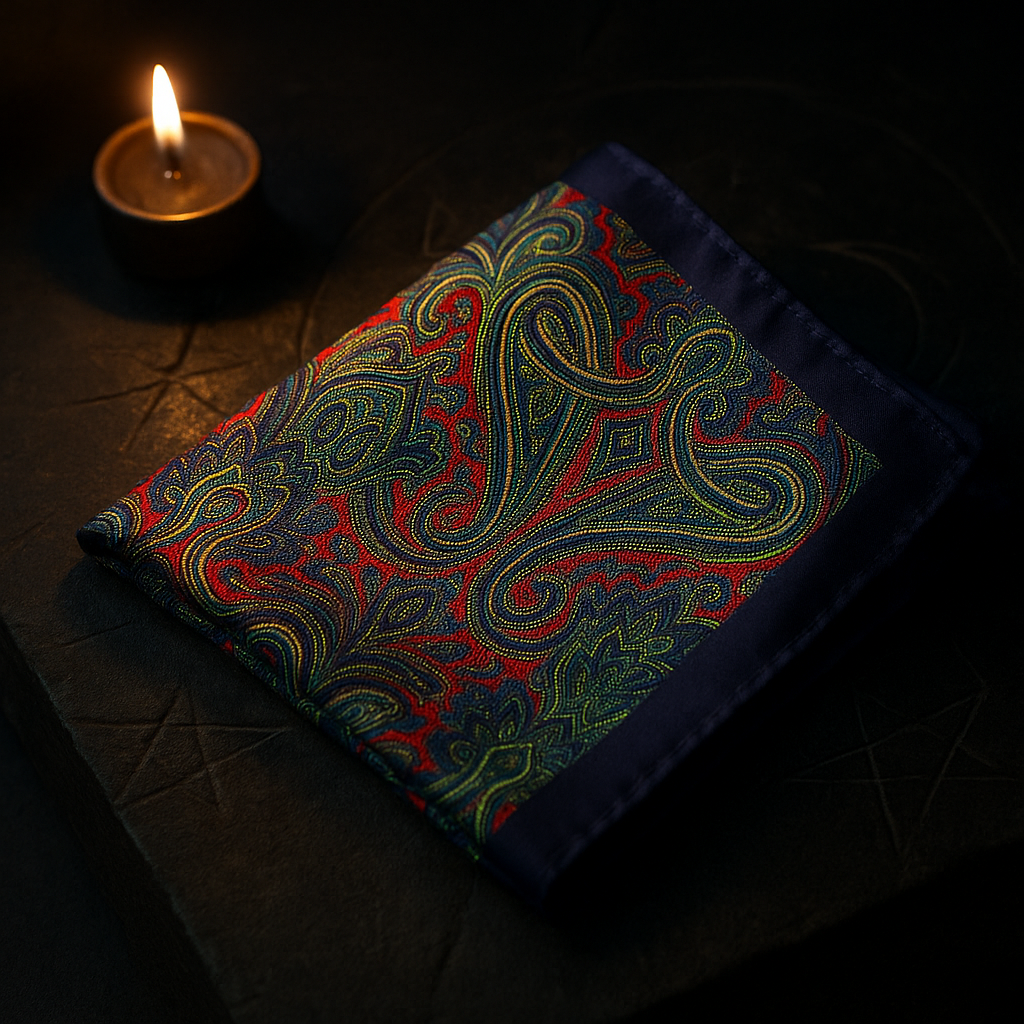
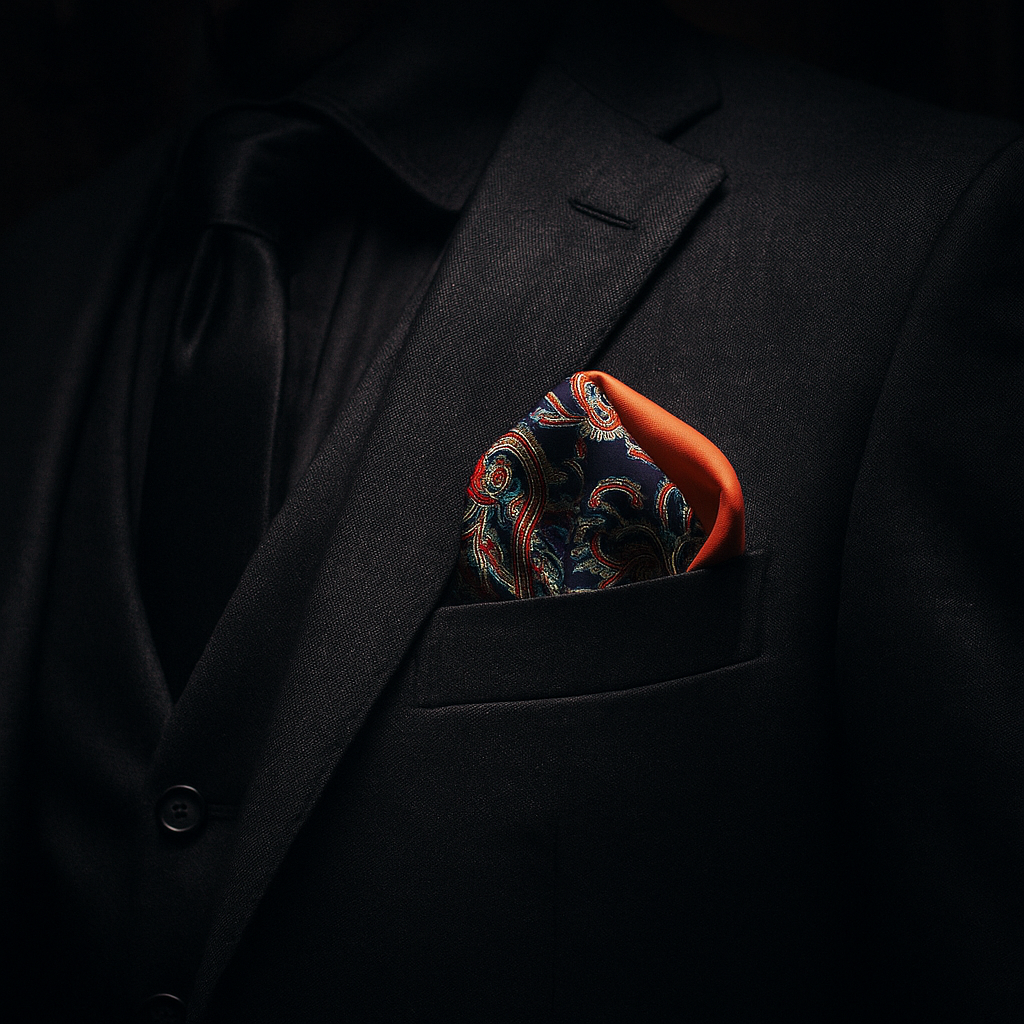
The man who wears a flat fold has decided something. He is not advertising the decision.
The One-Point Fold: The Statement of Intention
A single peak rising above the pocket’s edge; clean, directed, unambiguous. The one-point fold is the fold of declared intention. Where the flat fold withholds, the one-point announces. It rises. It points. It asks to be read as purposeful, which means the fabric it frames must be worth the attention it solicits.
This is the fold for cloth that has something to say; pattern, color, texture that rewards the elevation. The Veil of Verona, with its layered tonal complexity, earns the one-point’s upward gesture: the single peak becomes a frame for what lies beneath it, drawing the eye downward into the pattern’s depth. The Ninth Garden works similarly; the fold acting not as ornamentation but as introduction, a quiet clearing of the throat before the fabric speaks.
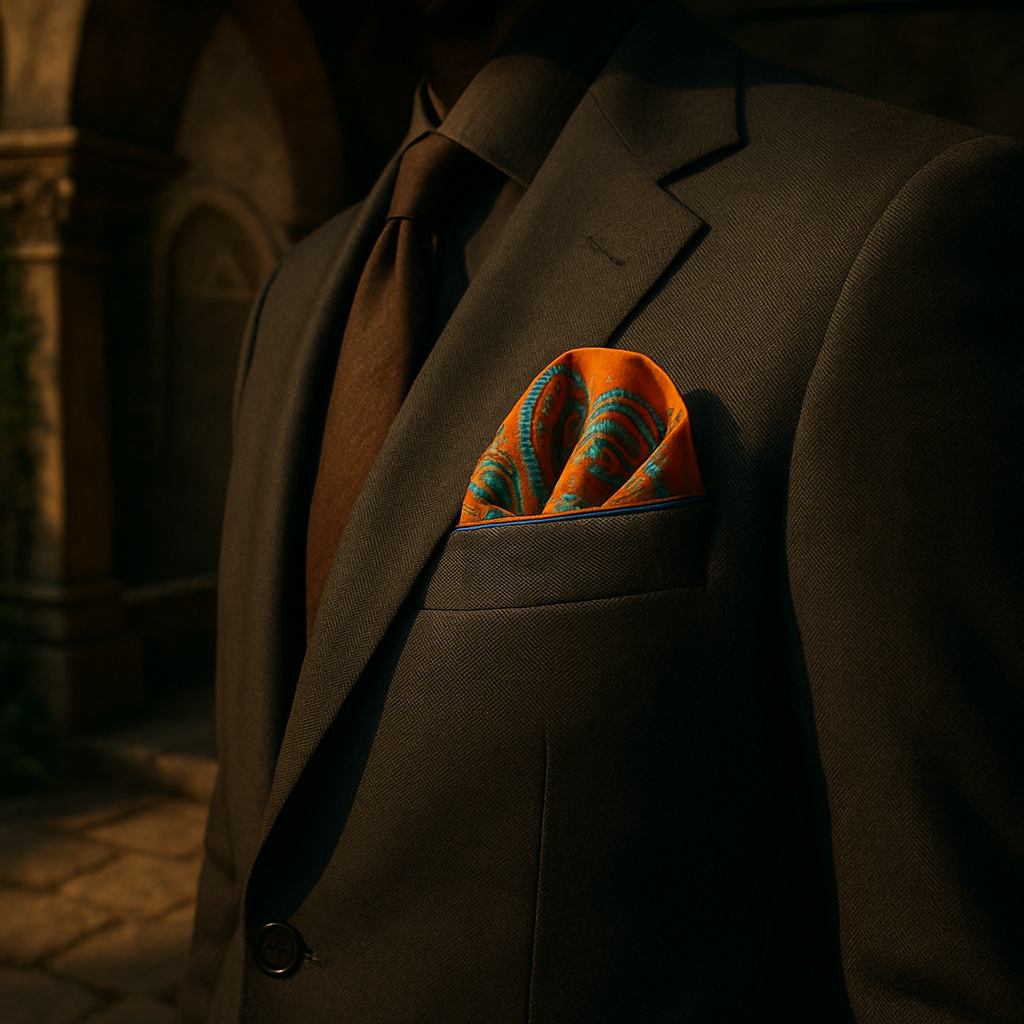
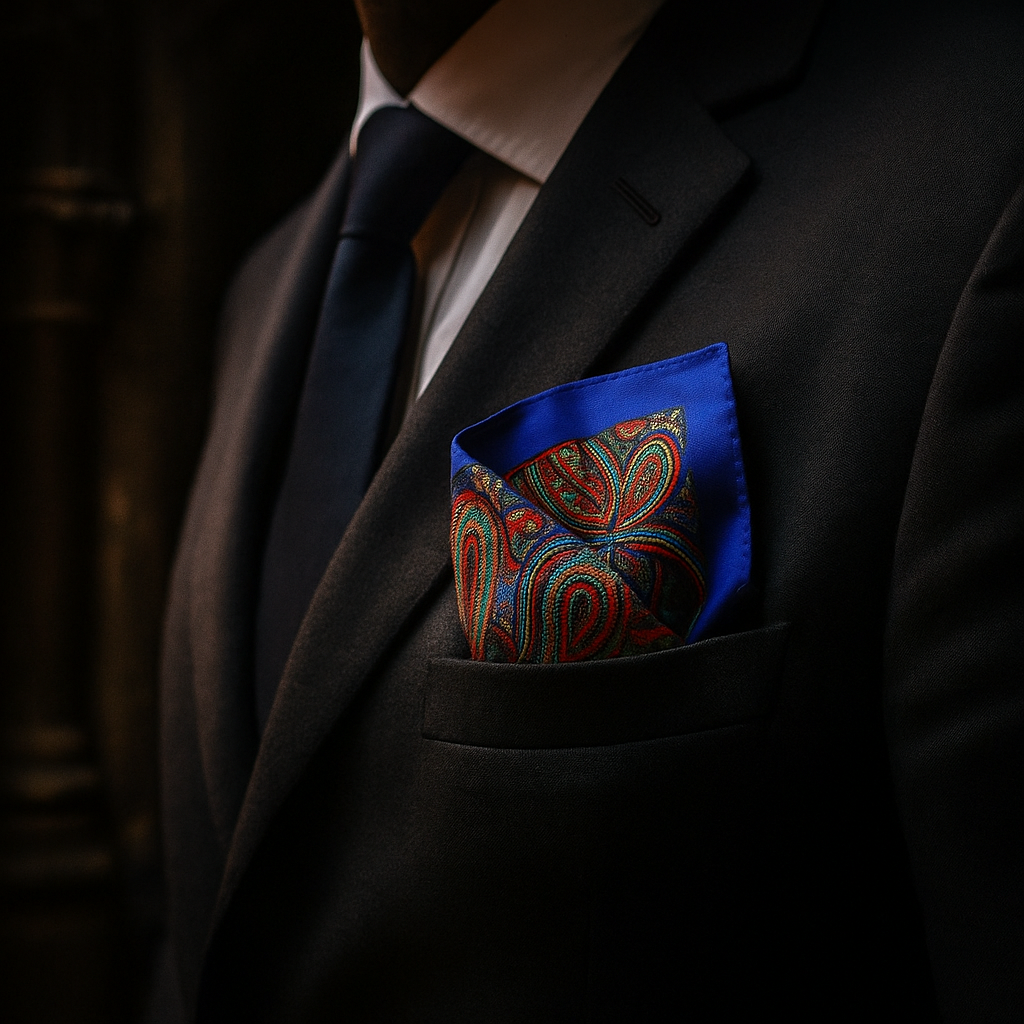
Intention without content is posturing. The one-point fold makes this visible immediately, which is part of its usefulness.
The Two-Point Fold: The Statement of Complexity
Two peaks, asymmetric or mirrored, rising at angles from the pocket. The two-point fold is the acknowledgment that some positions cannot be resolved into a single point of emphasis; that the interesting answer is sometimes not this or that but both, held in tension. It is the fold of the man who has considered more than one thing and has not pretended otherwise.
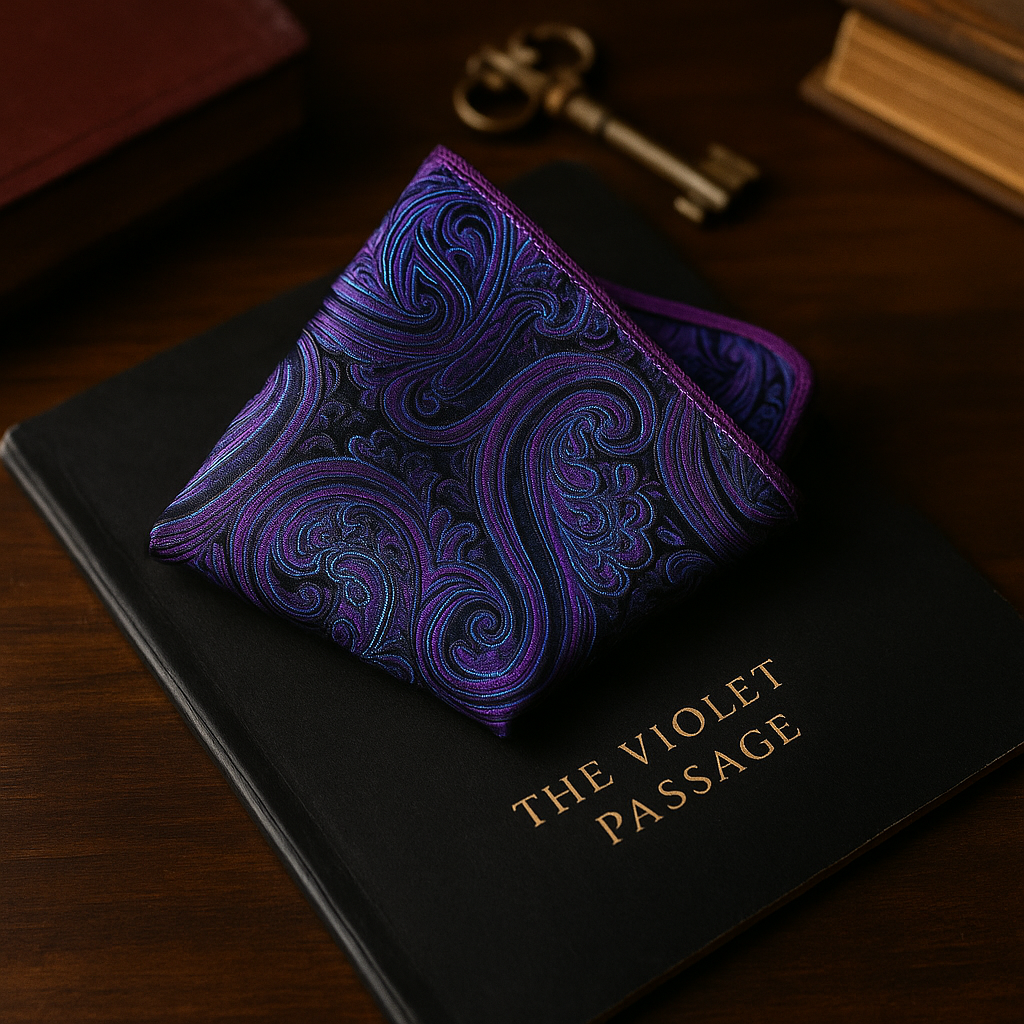
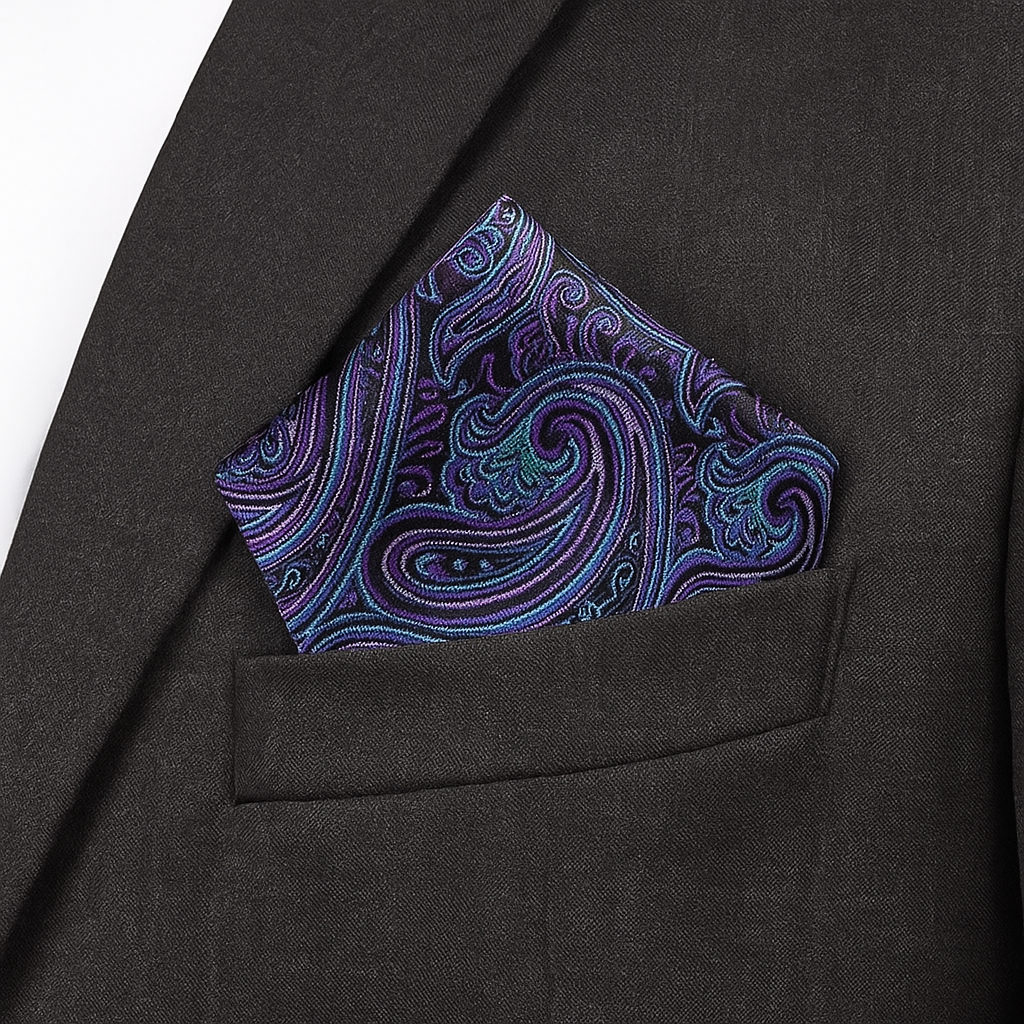
It suits fabrics with competing registers, patterns that shift in different light, colors that name themselves differently depending on what surrounds them. The Jade Protocol, whose deep green carries an almost mineral opacity, and The Violet Passage, which moves between warmth and cool depending on the angle of observation, both carry the two-point fold’s doubled argument naturally. The peaks do not contradict each other. They open a conversation between two readings of the same cloth, and leave it unresolved.
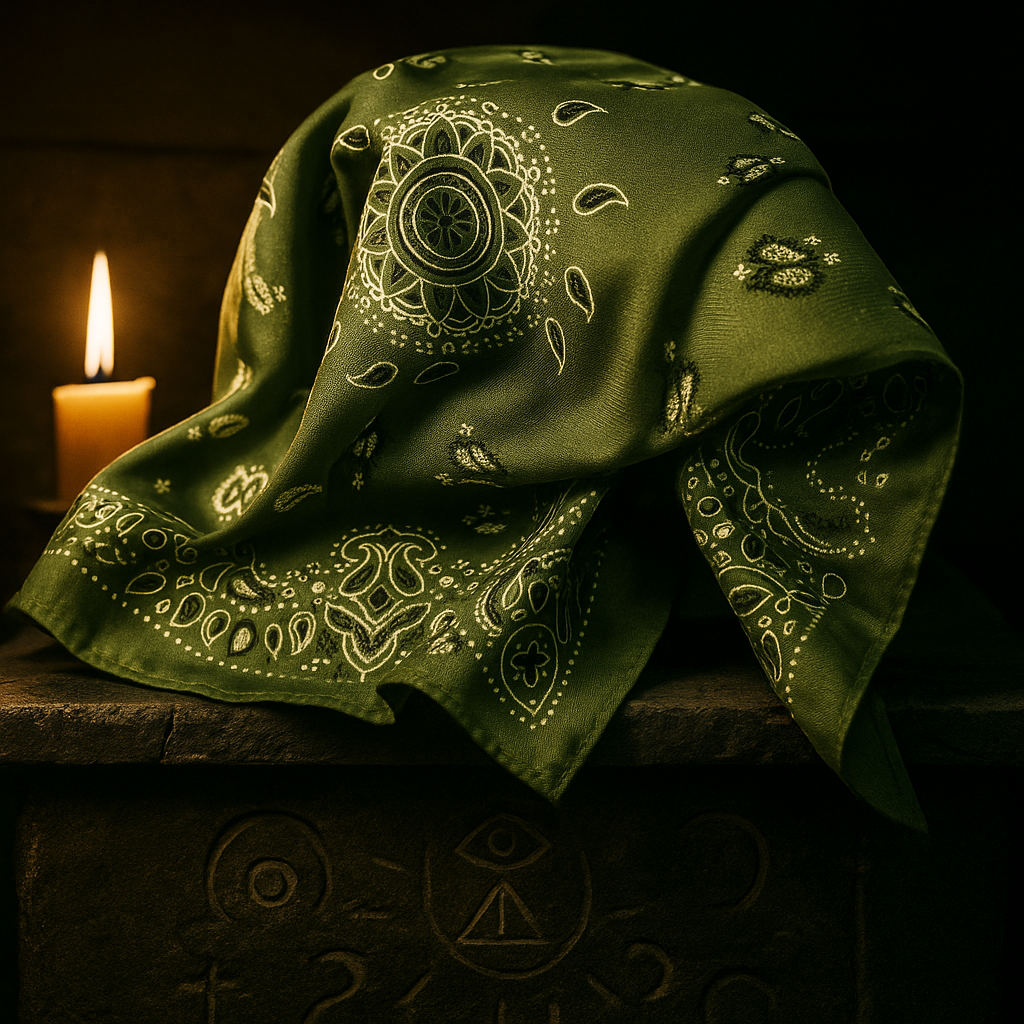
Unresolved is not undecided. The two-point fold knows this.
The Puff Fold: The Statement of Ease
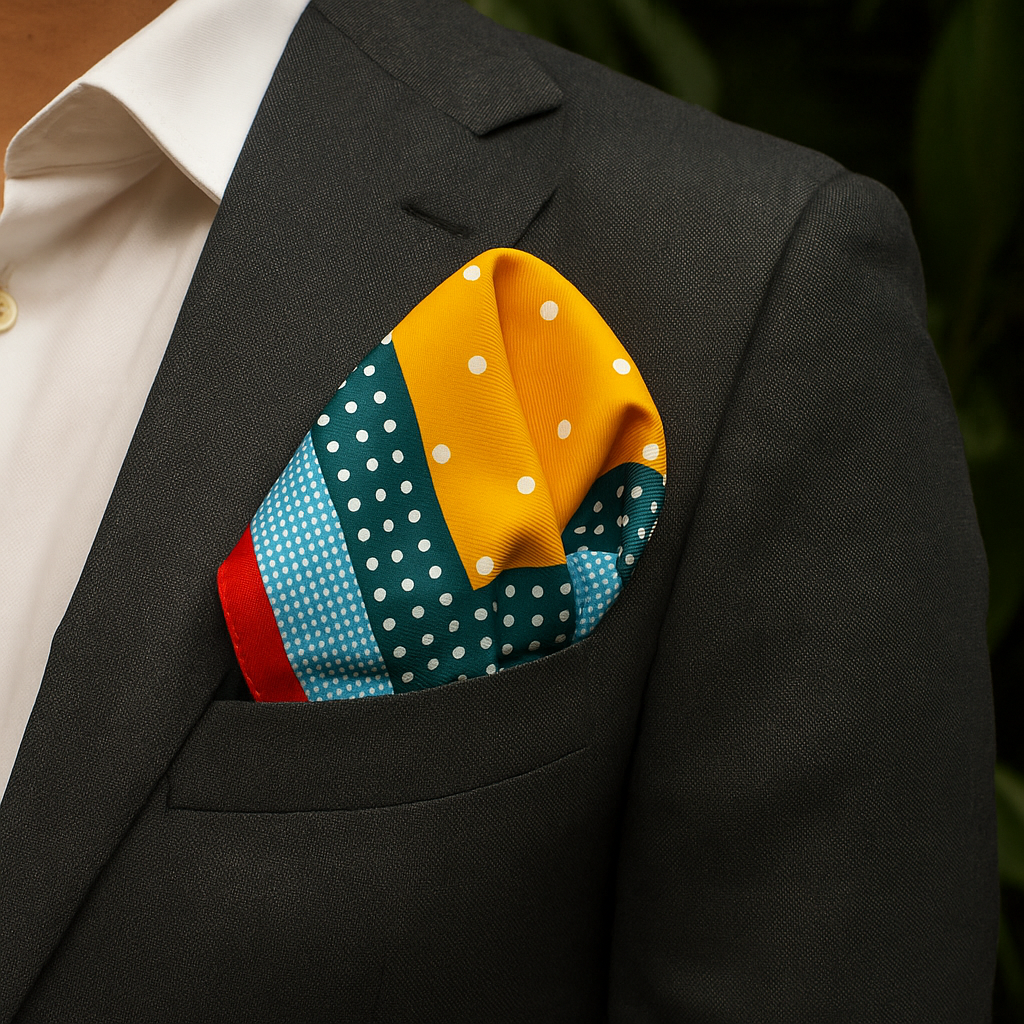
The puff, fabric gathered loosely and pressed upward without crease or defined peak, the edge soft and irregular, is the fold that has stopped trying to argue. This is not carelessness. Carelessness produces a different result entirely. The puff is the fold of a man who has internalized the rules deeply enough to set them aside without losing them; who wears ease as a cultivated condition rather than a natural one.
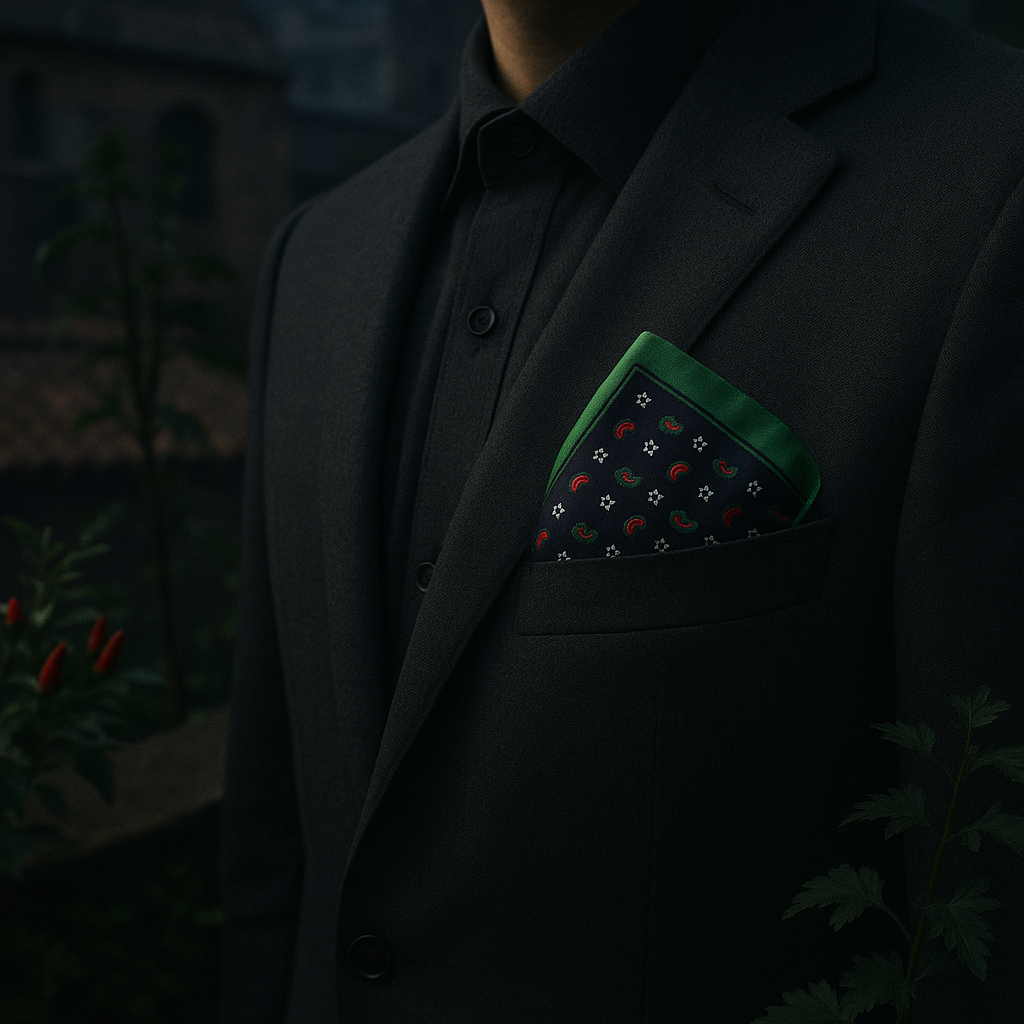
It demands the right fabric: silk that billows, linen that breathes, cloth that holds its softness without collapsing. Agent Carnival, whose pattern carries an almost theatrical energy beneath its surface restraint, and The Cipher Bloom, with its organic motif that resists strict geometry, both suit the puff’s refusal of the right angle. The fold matches the fabric’s argument: something is happening here that a crease would only interrupt.
Ease, correctly understood, is the most difficult statement to make convincingly.
The Multipoint Fold: The Statement of Deliberate Excess
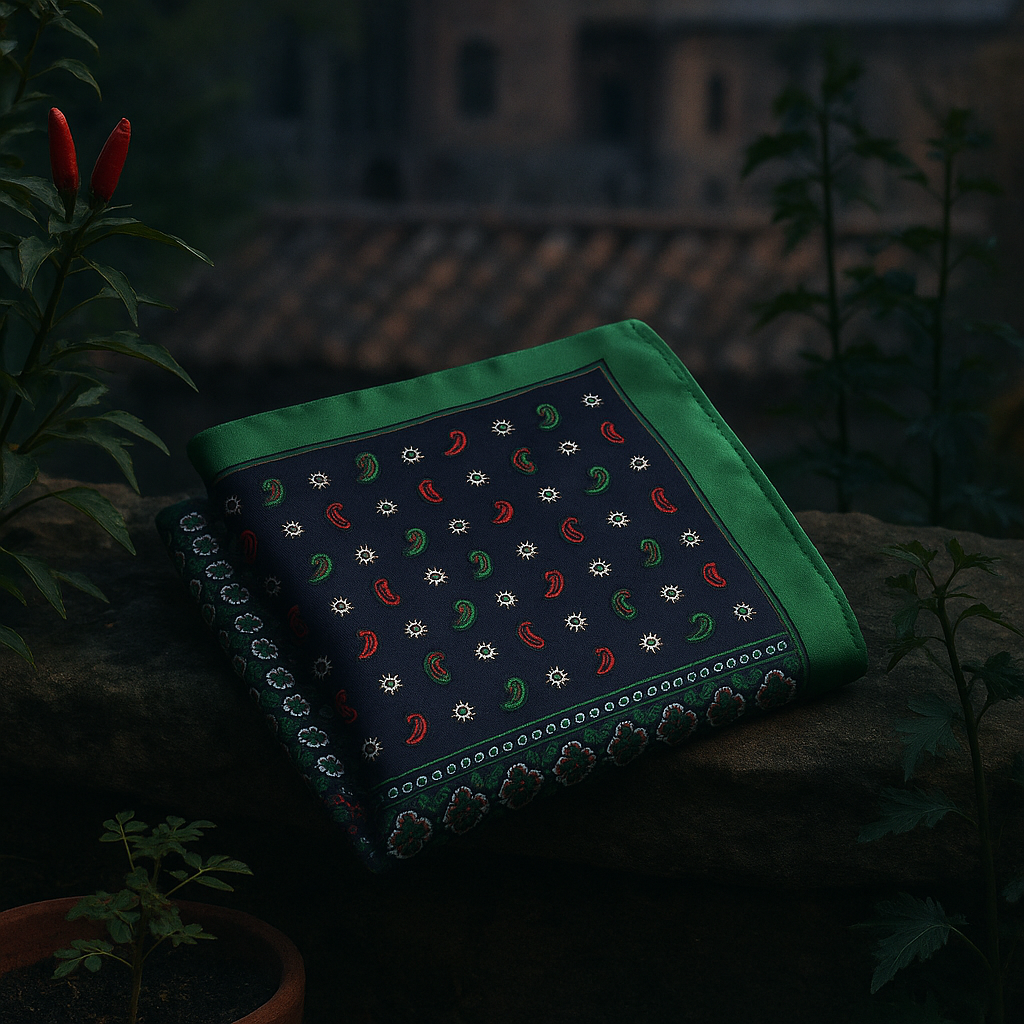
Three peaks, sometimes four, rising in controlled disorder from the pocket; the multipoint fold is the fold that knows it is too much and proceeds anyway. This is not the same as not knowing. Deliberate excess is a position, and it is one that requires more confidence to hold than restraint, because restraint is always available as cover. To choose the multipoint is to commit to abundance without apology, which the social codes of men’s dress have long treated as the harder thing to do.
It suits fabrics of genuine ambition: The Cipher Bloom‘s intricate botanical complexity, The Violet Passage‘s layered chromatic depth, cloth that does not simplify, worn in a fold that does not simplify, producing a statement that asks the room to meet it rather than the other way around.
Not every room is worth meeting on its own terms. The multipoint fold is for the ones that are.