The Self That Survives the Day
There is a version of you that only appears when the conditions that sustain the daytime self have been withdrawn. The social scaffolding is down. The performance has ended. The cortisol that mobilizes action and calibrates social presentation has dropped toward its daily floor. What remains, exposed, unmanaged, sometimes surprising, is something the daylight hours reliably conceal.
This is not mysticism. It is chronobiology: the study of how biological processes oscillate across time. The circadian rhythm, the approximately twenty-four-hour cycle governing virtually every system in the body, does not merely regulate sleep and wakefulness. It modulates mood, cognition, impulse control, emotional reactivity, moral reasoning, and the specific quality of attention available at any given hour. The self is not a fixed quantity. It is a time-dependent phenomenon, and different hours produce genuinely different people from the same body.
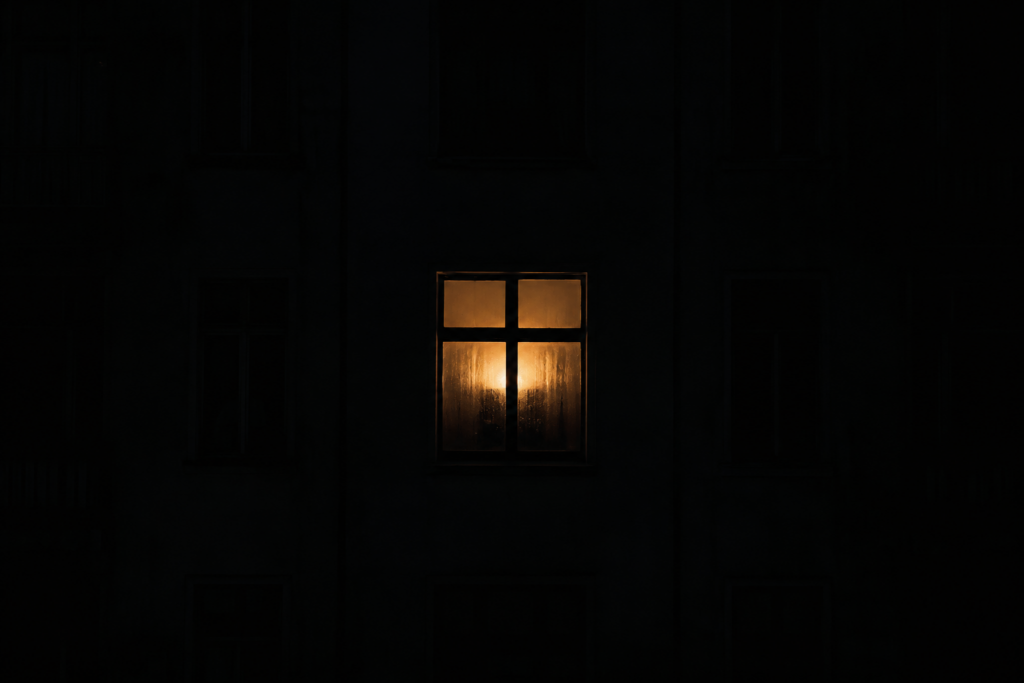
What 3 AM reveals is not the true self in some romantic sense. It is one of several selves; but the one least managed, least curated, and most likely to act from whatever is actually structuring the interior life beneath the adaptive competencies of daylight.
The Architecture of the Cortisol Curve
Cortisol is the hormone most people associate with stress, which is accurate but incomplete. It is more precisely the hormone of mobilization; it raises alertness, sharpens social perception, suppresses certain emotional responses in favor of functional ones, and provides the neurochemical substrate for the kind of self-presentation that social life requires. It follows a precise daily curve: rising sharply in the first hour after waking, the cortisol awakening response, peaking in the mid-morning, and declining across the afternoon and evening toward its nocturnal nadir.
At 3 AM, cortisol is at or near its lowest point. The neurological effects are measurable and specific. Prefrontal cortical function, the system governing inhibition, forward planning, and the modulation of emotional response; is significantly reduced. The amygdala, which processes threat and emotional salience, operates with less prefrontal oversight. Thoughts arrive without the usual gatekeeping. Feelings register with an intensity and literalness that the managed daytime self would typically intercept and translate before allowing them to influence behavior.
This is why decisions made at 3 AM have a different character than decisions made at 10 AM, and why the thoughts that arrive at that hour feel both more urgent and less trustworthy. The urgency is the signal arriving without the usual attenuation. The untrustworthiness is the absence of the interpretive layer that normally contextualizes it. Both are true simultaneously. The difficulty is that the hour removes the capacity to hold them in proper relation.

What Fatigue Does to the Moral Self
Sleep deprivation research has produced one of the most uncomfortable findings in modern psychology: moral reasoning degrades predictably with fatigue, and the degradation follows a specific pattern. What erodes first is not the capacity to identify what is right; subjects remain broadly accurate on abstract ethical questions even when significantly sleep-deprived. What erodes is the will to act on that identification when acting carries any cost.
The fatigued self knows what it should do. It simply assigns that knowledge less weight.
This finding, replicated across multiple research contexts, suggests that moral behaviour is more metabolically expensive than moral cognition. Knowing requires less than doing. The 3 AM self has the knowledge but has spent the resource that converts knowledge to action. What remains is a self that can reason clearly about virtue in the abstract while making choices it will later find difficult to account for.
The ancient virtue ethicists would not have been surprised. Aristotle’s concept of akrasia, weakness of will, the condition of acting against one’s own better judgment, was understood as a failure of integration rather than of knowledge. The person in akrasia knows and does otherwise. Fatigue is one of the most reliable inducers of akratic states the body can produce. The clock, in this sense, is a moral variable.
The Hours and Their Specific Textures
The circadian rhythm does not merely divide waking from sleeping. It produces distinct cognitive and emotional textures at different hours, documented across decades of chronobiological research.
The early morning, roughly 6 to 9 AM, depending on chronotype, is the period of peak cortisol, highest pain tolerance, greatest capacity for complex social navigation, and the most effective suppression of ruminative thought. It is the hour most amenable to the presentation of a coherent, functional self to the world.
The mid-afternoon, the post-prandial dip around 2 to 3 PM, produces a secondary trough: alertness drops, reaction times lengthen, and creative associative thinking paradoxically increases as the prefrontal grip loosens slightly. The Mediterranean siesta and the Japanese inemuri are not cultural indulgences but chronobiologically accurate responses to a real physiological event.
Late night, midnight onward, produces what researchers have termed night-owl cognitive shifts: increased sensitivity to emotional stimuli, reduced capacity for threat assessment accuracy, elevated impulsivity, and a characteristic loosening of the associative constraints that structure daytime thought. Writers and artists have long known this hour as productive; what chronobiology adds is the mechanism. The loosening is real. The question is what it is loosening into.
3 AM as Diagnostic Instrument
If you want to understand someone, including yourself, attend to what they do in the hours when the management systems are offline. Not to judge it, but to read it. The 3 AM self is a signal, not a verdict.
What thoughts arrive unbidden at that hour? What fears surface that daylight keeps submerged? What desires clarify when the social cost of acknowledging them has been temporarily suspended by exhaustion? What does the mind return to, repeatedly, when the daytime agenda has been withdrawn?
These are not noise. They are, in the clinical language of chronobiology, the low-frequency signal that the high-frequency daytime activity normally masks. The self, like any complex oscillating system, has multiple frequencies running simultaneously. The louder ones dominate waking life. The quieter ones become audible only when amplitude drops.
This is what writers mean when they describe the night as honest. It is not that the night produces truth and the day produces falsehood. It is that the night removes one layer of the filter and makes visible what was present all along but operating below the threshold of daylight’s attention.
What to Do With the Information
The chronobiology of character does not recommend 3 AM as a decision-making environment. It recommends it as a diagnostic one. The appropriate response to what surfaces at that hour is neither immediate action nor immediate dismissal. It is the practice of noting, with the same clinical detachment a physician brings to a symptom, what has appeared, and deferring assessment until the system is restored.
This requires a discipline that the hour itself undermines, which is why most people either act on what 3 AM produces or bury it by morning. The third option, to hold the material without acting on it, to carry it into daylight and examine it under conditions of full cognitive function, is the one most likely to yield information rather than either impulsive response or defensive forgetting.
Sleep itself is not merely rest. It is the process by which the brain consolidates, integrates, and edits the day’s accumulation, separating signal from noise, moving certain material into long-term storage and releasing other material. What you remember of 3 AM by 10 AM has already been through that editorial process. This is useful. It is also why the notebook on the nightstand remains one of the more honest instruments of self-knowledge available: it captures the signal before the editing begins.
The clock is not neutral. It is a condition of character. To know yourself without accounting for the hour is to know a partial self; the one that presents well. The one that functions at 3 AM is different, and it is worth meeting.