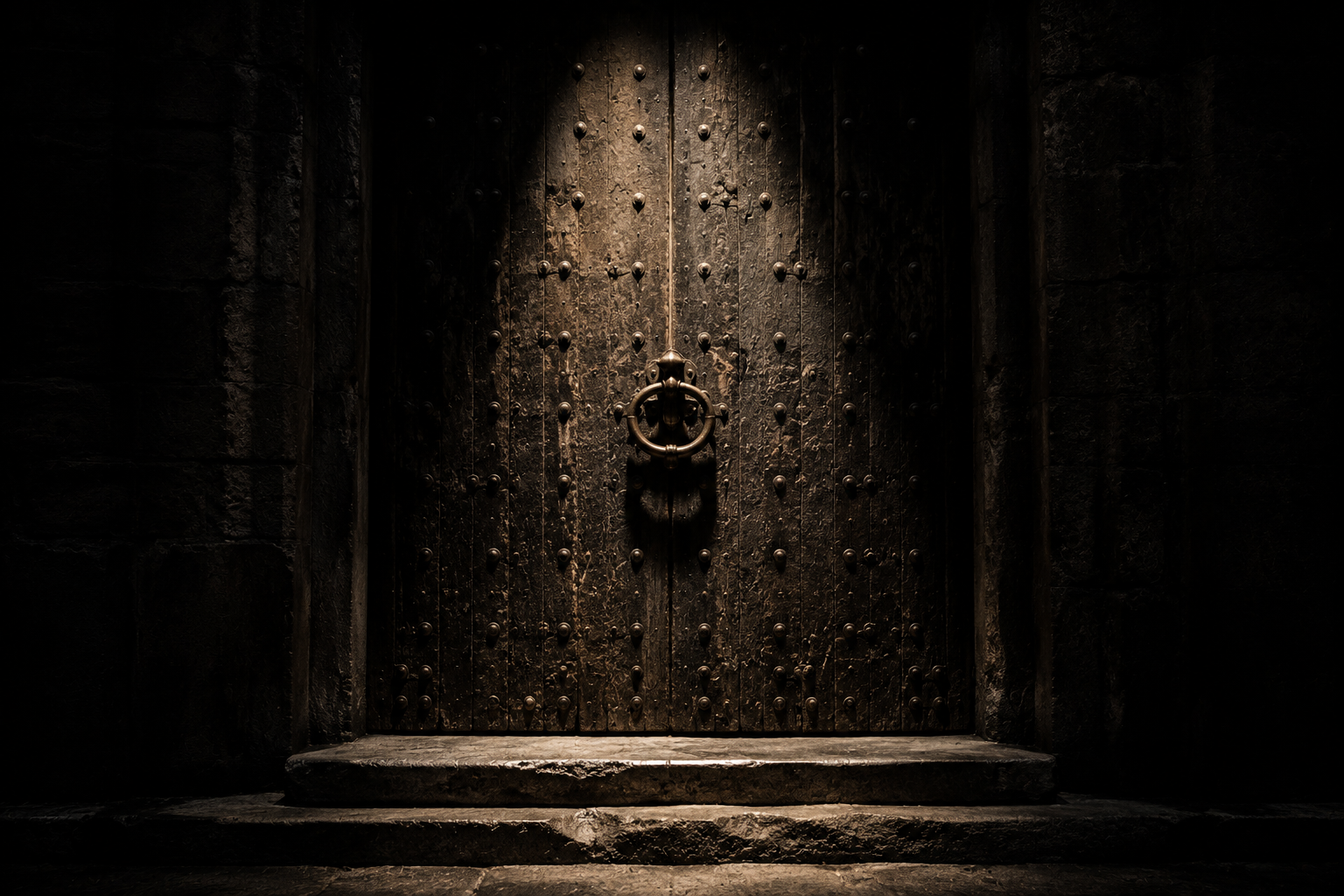
Before you enter, you announce yourself. This is the oldest social protocol in the world, older than language, older than the door itself. The knock precedes the crossing. It mediates between the outside and the inside, between the uninitiated and the admitted, between the profane space and the one that requires permission to enter.
But the knock is not simply a signal. It is a sentence. And like all sentences, it has grammar.
Three Is Not Four
The first thing to understand about ritual knocking is that the number is never incidental. In contexts where percussion carries meaning, the count is the content. Change the number and you have said something different, or said nothing at all, or said the wrong thing to the wrong door.
Masonic ritual makes this explicit in a way that other traditions leave implicit. The three degrees of initiation each carry their own distinctive knock: a pattern of strikes that identifies the initiate’s level to the Tyler standing guard at the lodge door. The knock is a credential. It cannot be faked without knowledge, and the knowledge cannot be purchased. It must be transmitted, degree by degree, through the structure of initiation itself. The door does not open for the uninstructed, not because it is physically barred, but because the language has not been learned.
This principle is not unique to Freemasonry. It surfaces wherever threshold ritual is taken seriously. The pattern encodes the permission. The permission encodes the identity. The identity encodes the preparation.
The Sufi Drum and the Beat of Invocation
In Sufi practice, the frame drum and the duff carry rhythmic patterns that are understood as more than music. The dhikr, the remembrance ceremony, is structured around repetition: the name of God spoken, chanted, breathed, and beaten into the body at specific rhythmic intervals. The number of repetitions matters. Thirty-three, ninety-nine, one thousand and one. These are not round numbers chosen for convenience. They are precise quantities carrying specific theological weight.
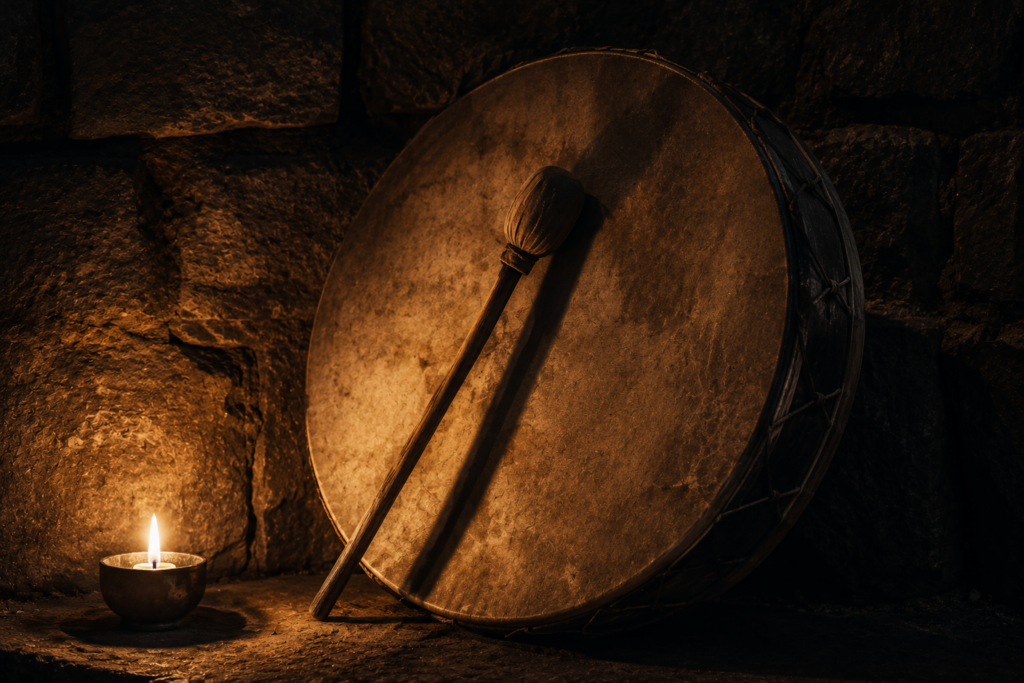
The drum in this context is not accompaniment. It is invocation. The beat creates a condition in the listener and the practitioner: a state of receptivity, a dissolution of ordinary mental noise, an opening. The rhythm is the threshold, made audible and felt in the chest.
Ibn Arabi, the great Andalusian mystic, wrote of the relationship between sound, number, and the divine presence in terms that prefigure what we would now call acoustic theology. The pattern of the beat is not arbitrary. It is a key cut to fit a specific lock in the structure of attention. Three beats in one pattern open something that four beats in the same pattern do not.
Orthodox Knocking: The Semantron and Sacred Time
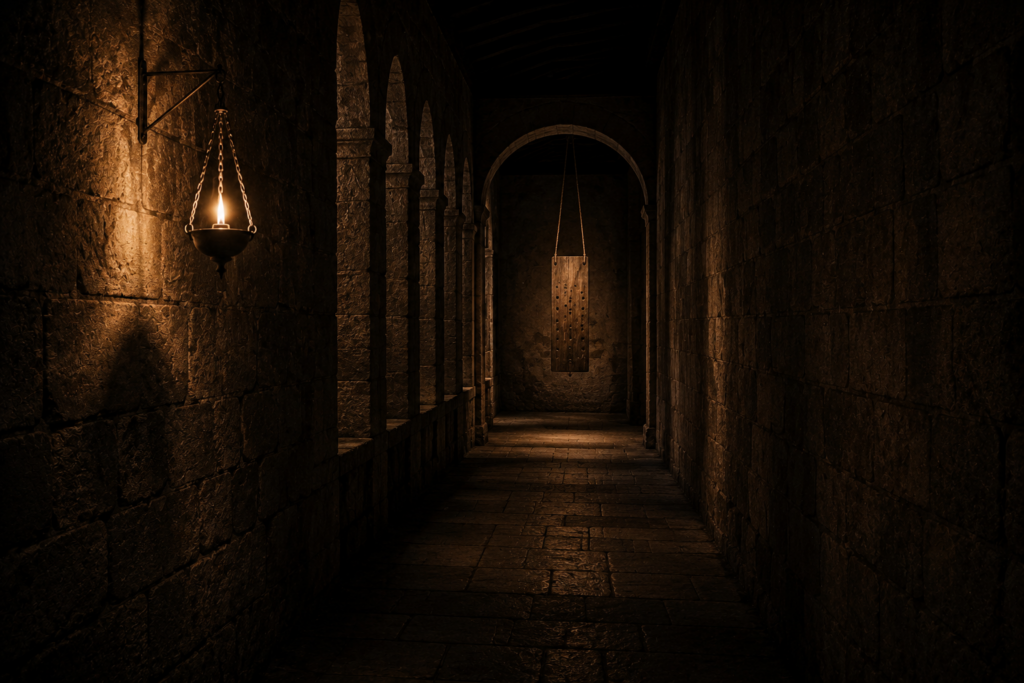
Before bells became universal in Christian practice, the Eastern Orthodox church used the semantron: a plank of wood or metal struck with a mallet, its sound carrying across the monastery to call the community to prayer. The semantron is still used in some Orthodox monasteries today, and its use is not merely traditional. It is deliberate.
The patterns struck on the semantron are not uniform. Different patterns signal different times and different services. The monk who strikes it is performing a liturgical act, not ringing a bell. The number and rhythm of strikes tell the community not just that it is time, but what kind of time it is. Vigil is different from Vespers. The Resurrection service is different from a funeral. The semantron encodes the liturgical calendar into sound.
This is rhythm as sacred grammar: a language in which the pattern carries meaning that spoken language does not duplicate but complements.
Egypt and the Knocking at the Gates of the Dead
The Egyptian Book of the Dead describes in precise detail the gates through which the soul must pass in the afterlife journey. At each gate stands a guardian, and the soul must know the correct words, the correct gestures, and in some interpretations the correct number of strikes or calls to gain passage. The gates are not obstacles to be forced. They are thresholds to be negotiated, through knowledge, through correct form, through the proper ritual address.
The number of gates varies by text: seven, twelve, twenty-one. But the principle is constant. Each threshold requires a specific and correct approach. The soul that does not know the pattern does not pass. Preparation for death in the Egyptian tradition was in large part preparation in this grammar: learning what to say, how many times, in what sequence, at each successive threshold.
The knock at the gate of the underworld is the same in principle as the knock at the lodge door. It is proof of preparation. It is the body of knowledge, made audible at the moment of crossing.
The Body as Percussion Instrument
What makes knocking different from speech as ritual language is its physicality. The knock is produced by impact: body against surface, object against object, force meeting resistance. It is felt as much as heard. In traditions that use the chest strike, the latmiyya of Shia mourning ritual, or the rhythmic foot-stamp of certain initiation ceremonies, the percussion is turned inward. The body strikes itself. The boundary between instrument and practitioner dissolves.
This is the percussion that leaves a mark not on the door but on the person knocking. The repetitive strike in ritual context is understood, across traditions, to produce a change in state. Not through magic but through physiology and attention combined. The rhythmic pattern occupies the part of the mind that generates narrative and self-commentary, and in occupying it, quiets it. What remains, in the silence that rhythm creates inside noise, is a quality of attention that ordinary waking life rarely produces.
The knock that opens the door also opens something in the one who knocks.
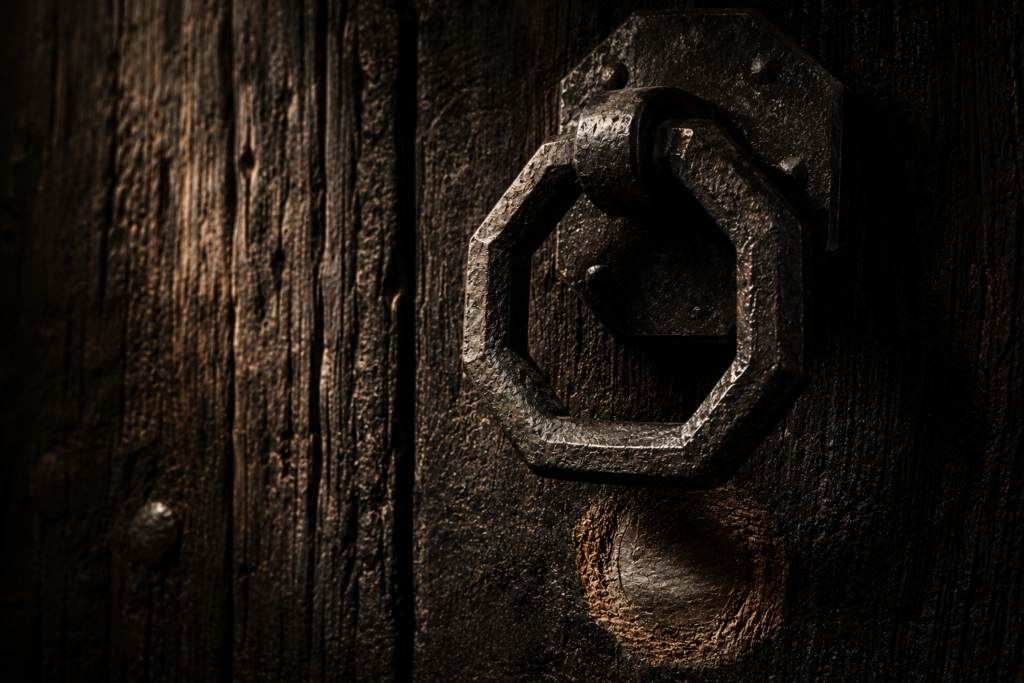
The Pattern That Precedes Entry
There is a reason that ritual knocking has survived in traditions otherwise radically different from one another. It solves a problem that every sacred threshold presents: how do you mark the difference between the crossing that is prepared and the crossing that is not?
The prepared crossing requires something of the person who makes it. It requires knowledge, practice, memory, and attention. The knock that carries meaning cannot be performed absentmindedly. It cannot be performed in the wrong state. To produce the correct pattern with the correct force at the correct moment requires a quality of presence that, in requiring it, creates it.
This is the deepest function of the ritual knock. Not identification. Not exclusion. Not tradition for its own sake. It is the threshold’s way of ensuring that the person who arrives is actually there. That they have not drifted in on momentum, half-present, carrying the static of the ordinary world.
Three is not four. The pattern is not the same as the count. The knock is the first act of the ritual, and it demands from you what all ritual demands: that you arrive, fully, before you enter.